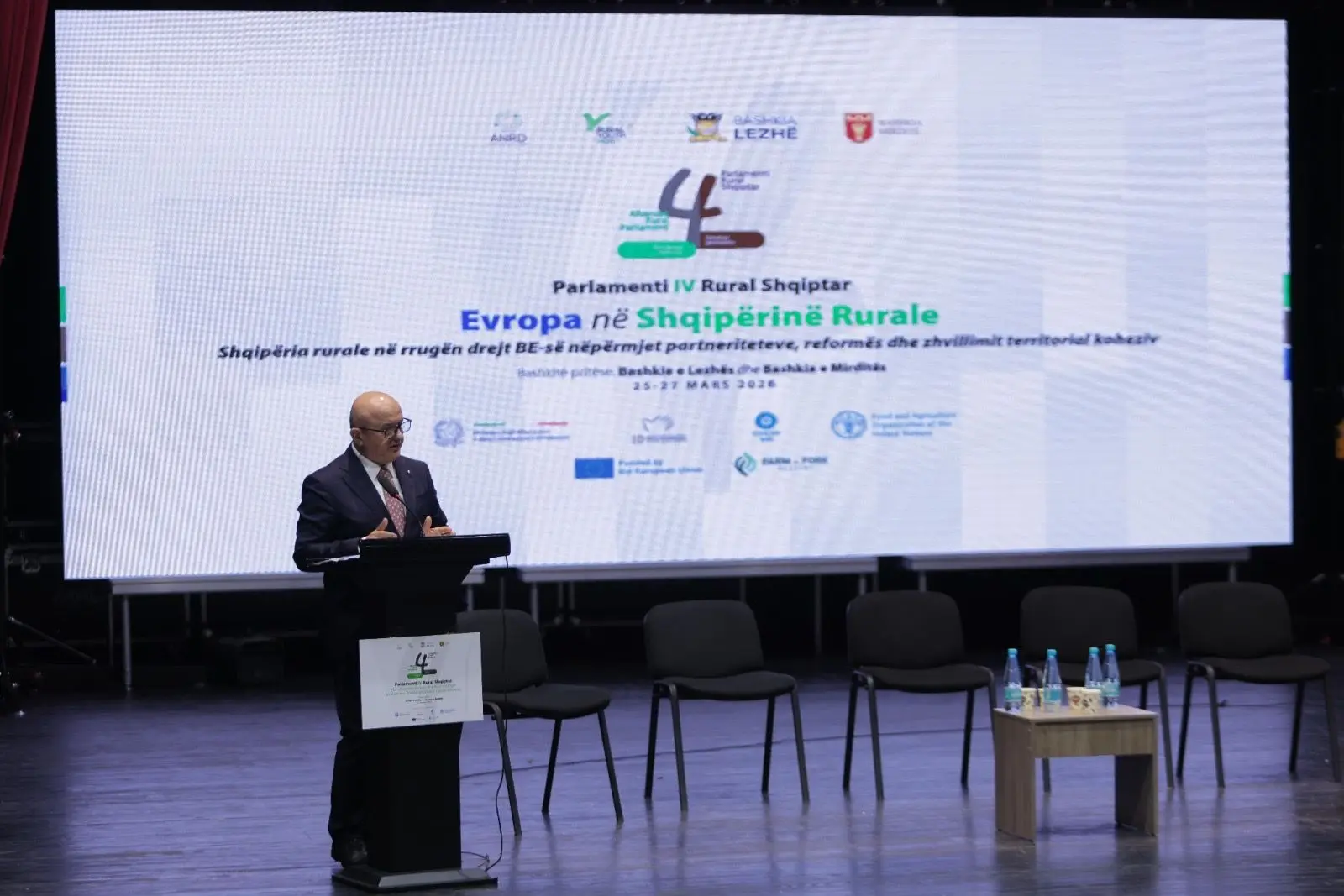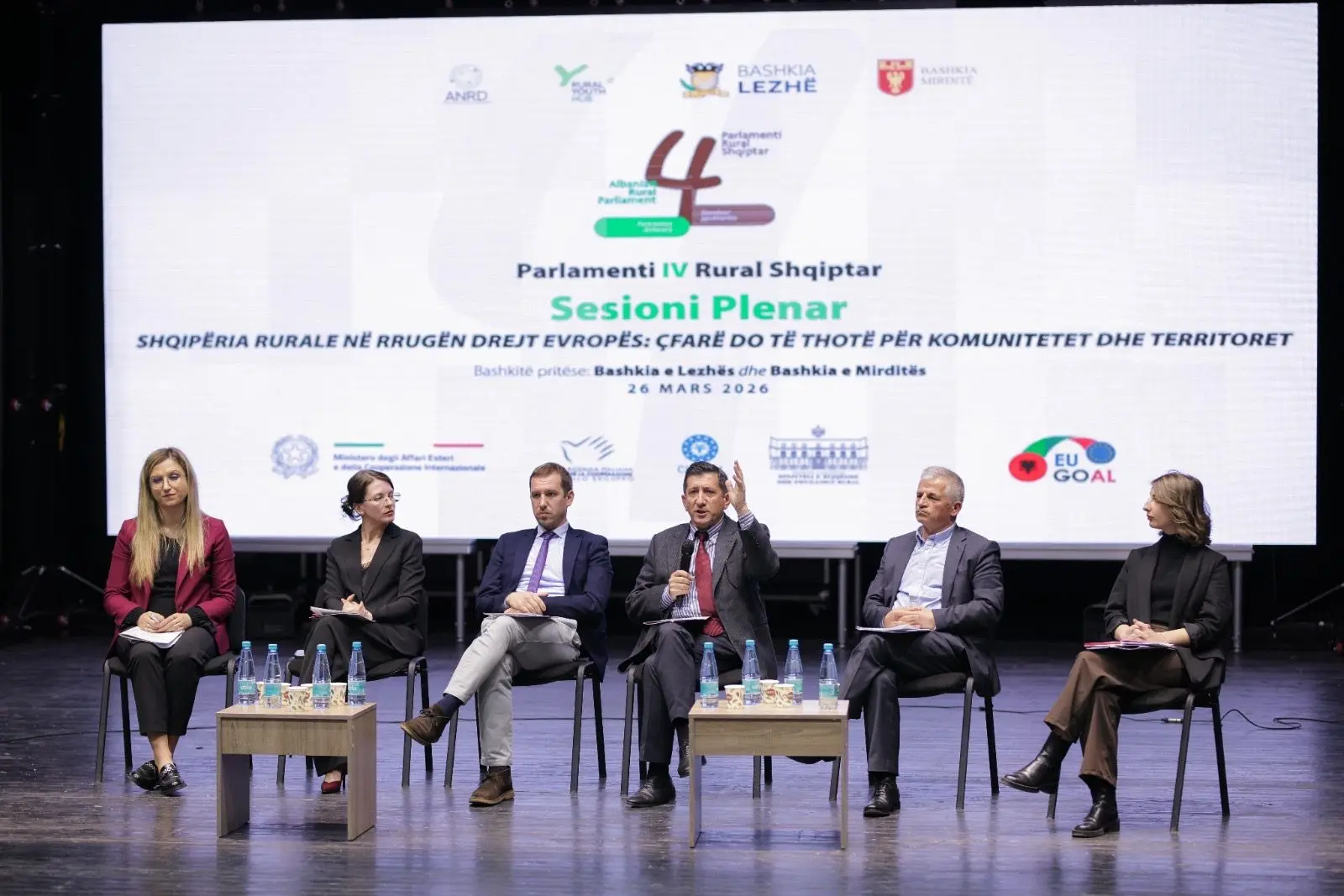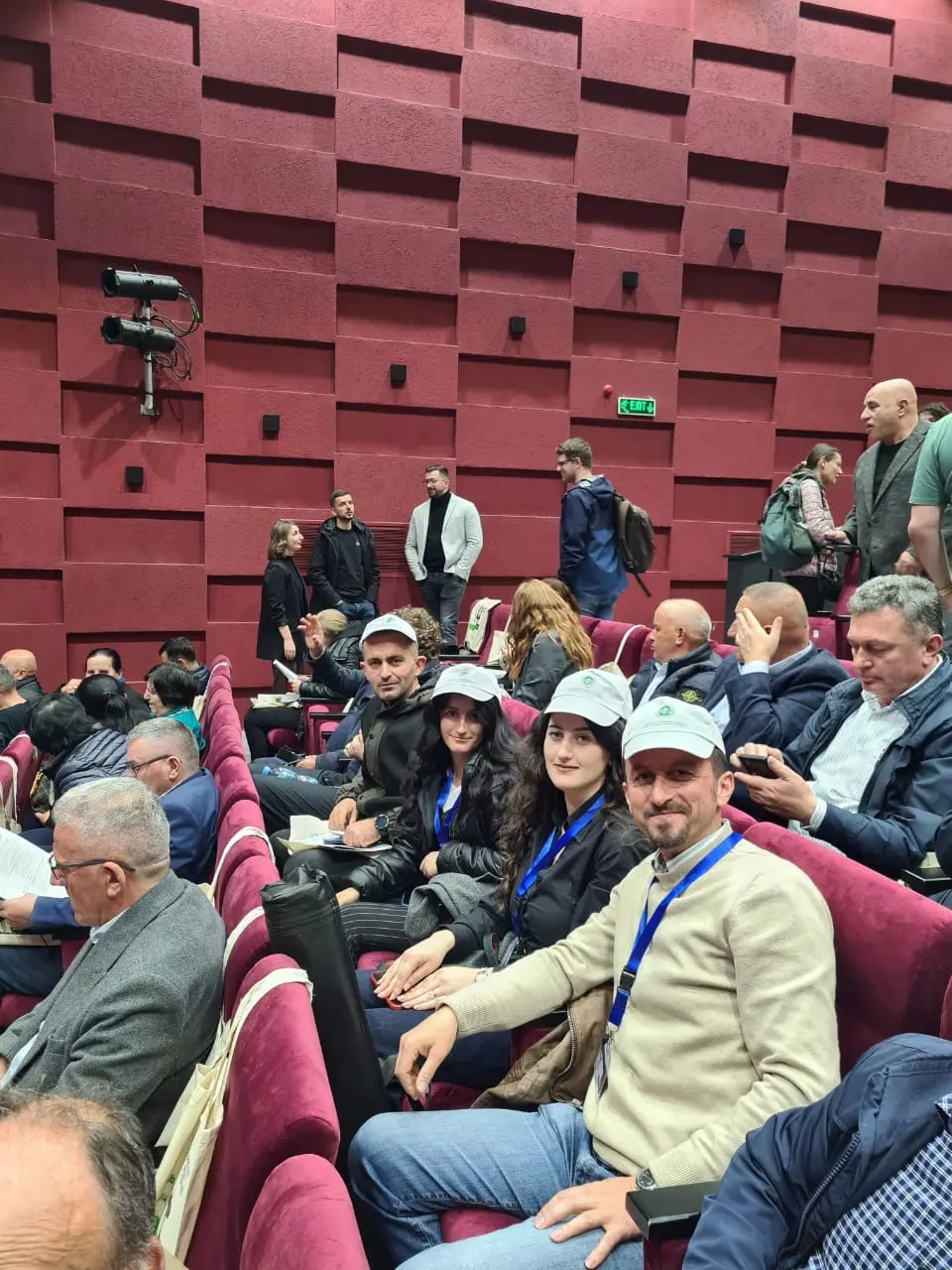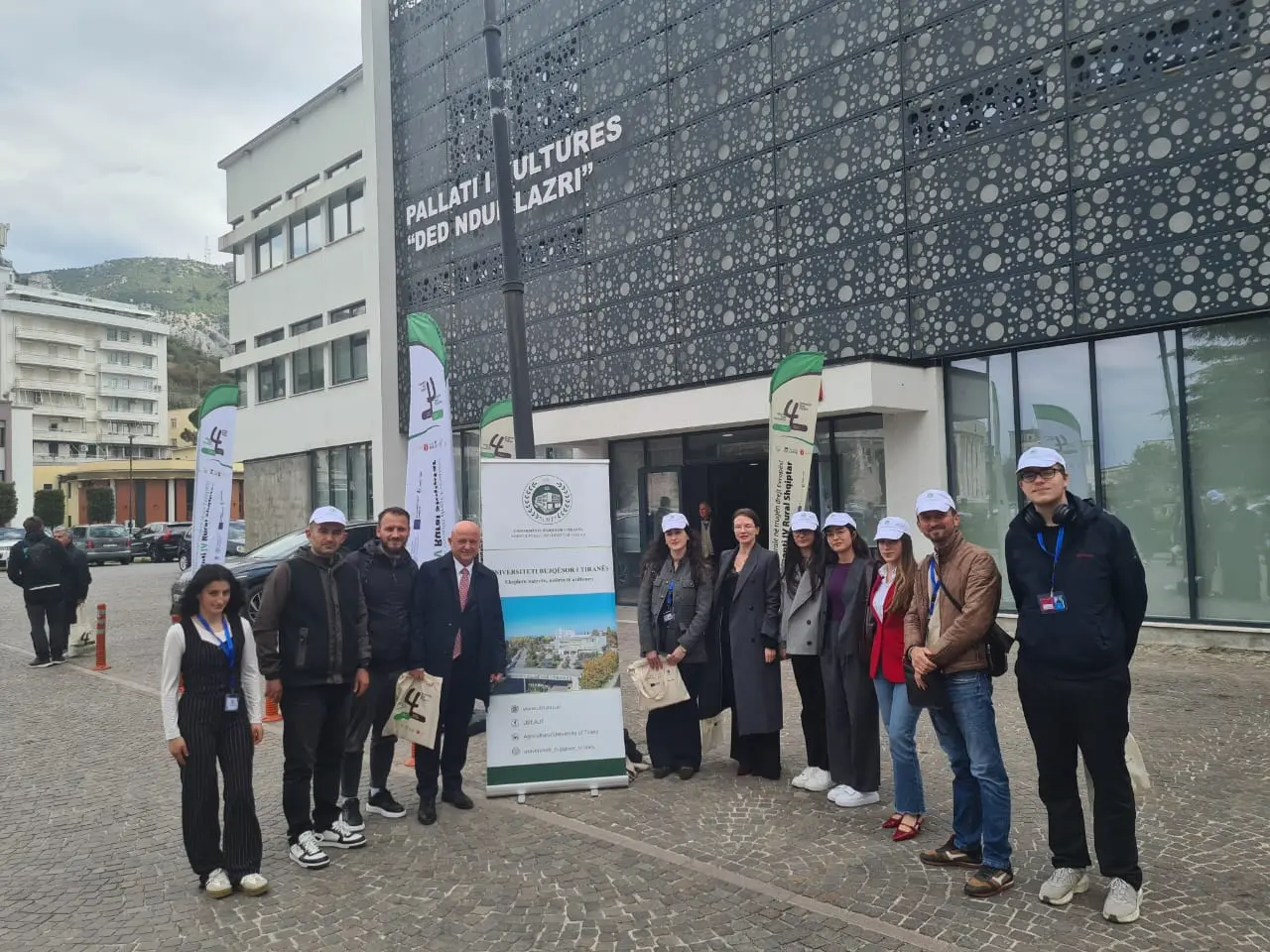
The Agricultural University of Tirana took part in the Albanian Rural Parliament, an important advocacy forum that brings together key actors and energies shaping the future of rural areas in Albania. UBT was represented at this event by its Rector, Fatbardh Sallaku, and the Vice Rector for Science and Projects, Erinda Lika, who participated in one of the Parliament’s panels focused on “Rural Albania on the path to Europe: what it means for communities and territories.” A group of UBT students were also part of this important event, which marked its fourth edition.
In his remarks, Rector Sallaku emphasized that Albanian agriculture is at a decisive moment, as the country advances in its European Union integration process.
“Albanian agriculture today no longer faces merely aspirations, but concrete responsibilities and a historic opportunity to transform the sector into a sustainable, competitive model fully aligned with European standards,” he stated. During his address, he emphasized that policies and funding, although important, are not sufficient if they are not accompanied by proper understanding and effective implementation on the ground. “The real impact of policies depends on how they are understood and applied in practice. For this very reason, cooperation among farmers, as well as education, training, and capacity building, are essential,” Rector Sallaku stressed. He placed particular emphasis on the role of training, describing it as the main bridge that connects policy with practice.
“Training is the bridge that turns support into real investment and helps farmers make informed, long-term decisions,” he added. He went on to emphasize that the future of agriculture must be built on knowledge and innovation. “The shift from tradition to innovation, from quantity to quality, and from informal practices to EU standards is no longer a choice, but a necessity,” declared rector Sallaku.
In this context, he also highlighted the comprehensive reform underway at the Agricultural University of Tirana, emphasizing that it has been specifically designed to respond to the evolving needs of the agricultural sector in Albania.
He further emphasized that through this reform, AUT is positioning itself to more effectively connect education, scientific research, and practice, in support of farmers, institutions, and rural stakeholders in meeting European standards and modern development challenges.