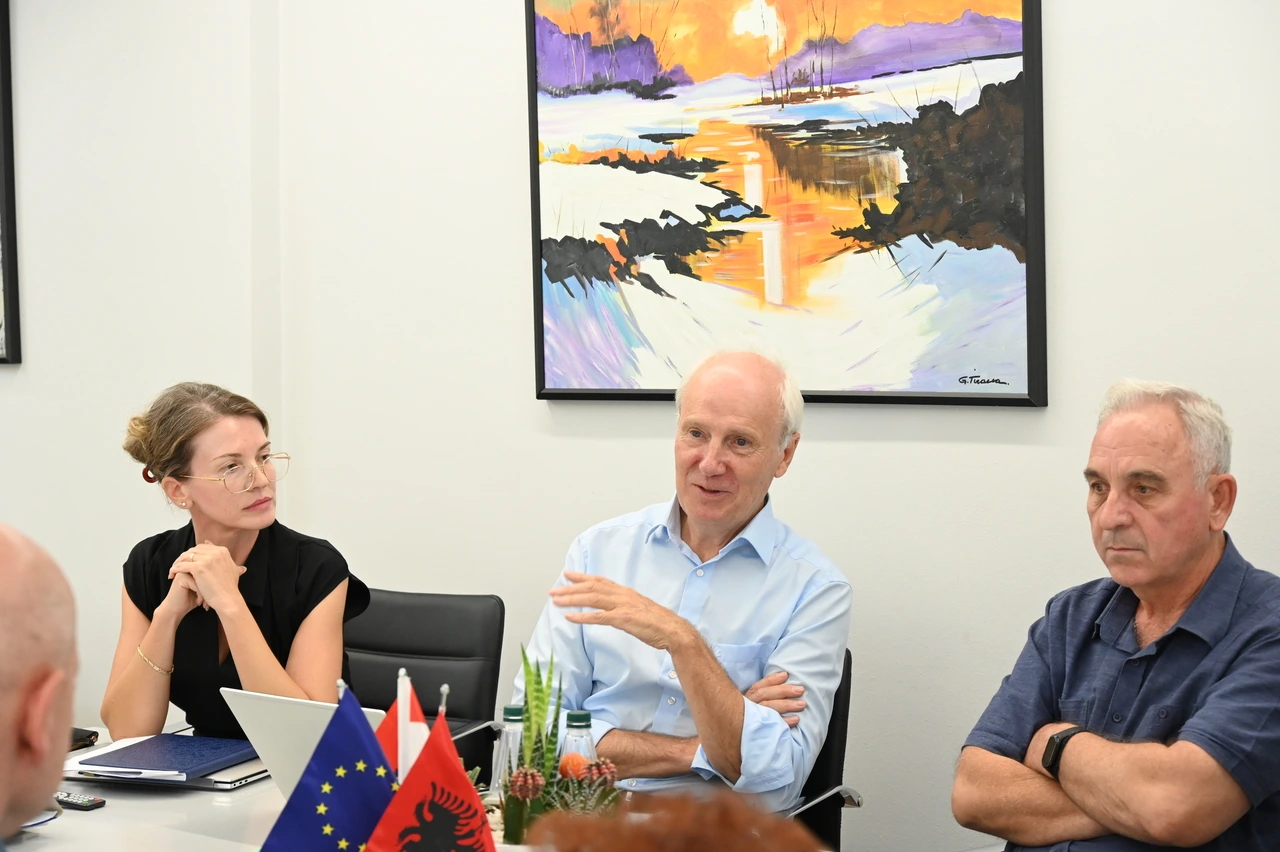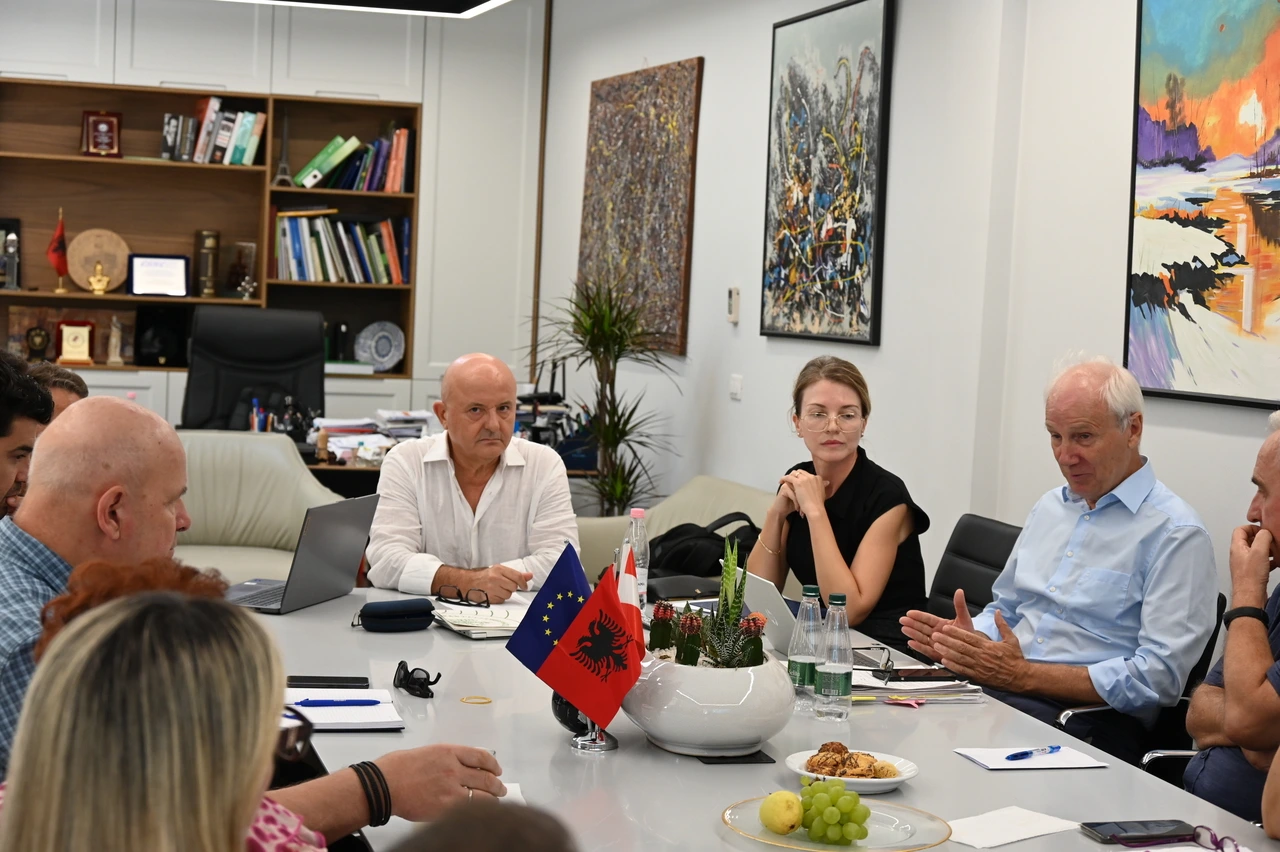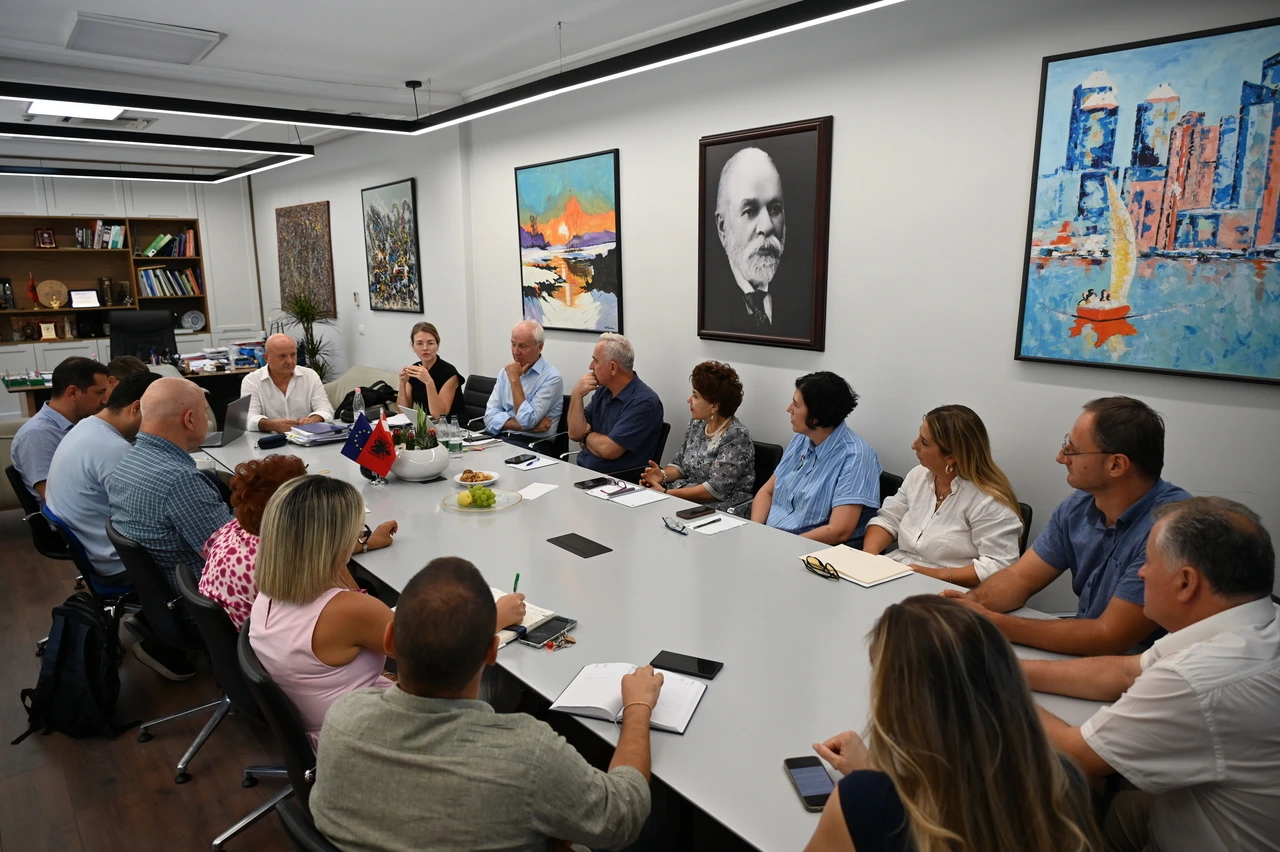
As part of the 27th BOKU–UBT Mission, an important part of the discussions focused on reforming doctoral programs and aligning them with the models of European universities. The discussions involved experts from the University of Natural Resources and Life Sciences, Vienna (BOKU), led by Prof. Dr. Hubert Hasenauer, Head of the BOKU–UBT Mission, as well as representatives of the Agricultural University of Tirana, led in this process by Vice-Rector for Science and Projects, Prof. Dr. Erinda Lika.
The focus was on developing a new model aimed at more closely linking doctoral education with scientific research, concrete projects, and international collaboration, as another component of the broader reform being implemented at UBT.
At the heart of the new model is the establishment of a direct link between doctoral research topics and the research projects carried out at the University. UBT faculty members and researchers who have secured national or international research projects will have the opportunity to propose doctoral research topics aligned with the objectives, activities, and expected outcomes of these projects.
This approach aims to ensure that doctoral studies are not merely an individual academic process, but become a structured research and professional engagement. Doctoral students will have the opportunity to participate in research groups, laboratories, experimental work, data collection and analysis, scientific publications, conferences, and international mobility programs.
Funding Opportunities Through Projects
One of the important elements of the reform concerns the funding of doctoral students. Projects supported by the European Union or other international programs may create opportunities to fund or employ doctoral students, where this is provided for under the project’s rules, duration, and budget.
In this way, UBT aims to establish a model in which doctoral studies are more closely connected to practical research, innovation, and professional development, while simultaneously creating greater opportunities for early-career researchers.
Doctoral Programs Open to International Candidates
Another key direction of the reform is to increase the internationalization of doctoral programs. The relevant calls for applications are intended to provide opportunities for international candidates to apply, subject to academic criteria, degree recognition requirements, and other applicable legal and administrative requirements.
The inclusion of international doctoral students is expected to foster the creation of international research groups, the exchange of knowledge and contemporary methodologies, an increase in scientific publications and research collaborations, as well as the development of programs and research conducted in English. At the same time, this will contribute to strengthening partnerships with European universities and increasing UBT’s participation in European Union projects.
An Open and Competitive Process
The reform provides for admission to doctoral programs to be an open, transparent, and competitive process. Even in cases where a faculty member has secured funding for a doctoral student through a research project, admission will not be automatic.
Every candidate, whether domestic or international, will be required to apply through the University’s official call for applications and undergo the established procedures, including document verification, evaluation of the research proposal, an interview, and merit-based ranking.
Through the UBT–BOKU collaboration, the Agricultural University of Tirana aims to further align the organization of its doctoral programs with the practices of European universities, while creating a more attractive environment for early-career researchers from Albania and abroad.
Research-driven doctoral studies, funding opportunities through projects, openness to international candidates, and stronger collaboration with European universities are the key pillars of the new model that UBT aims to develop.