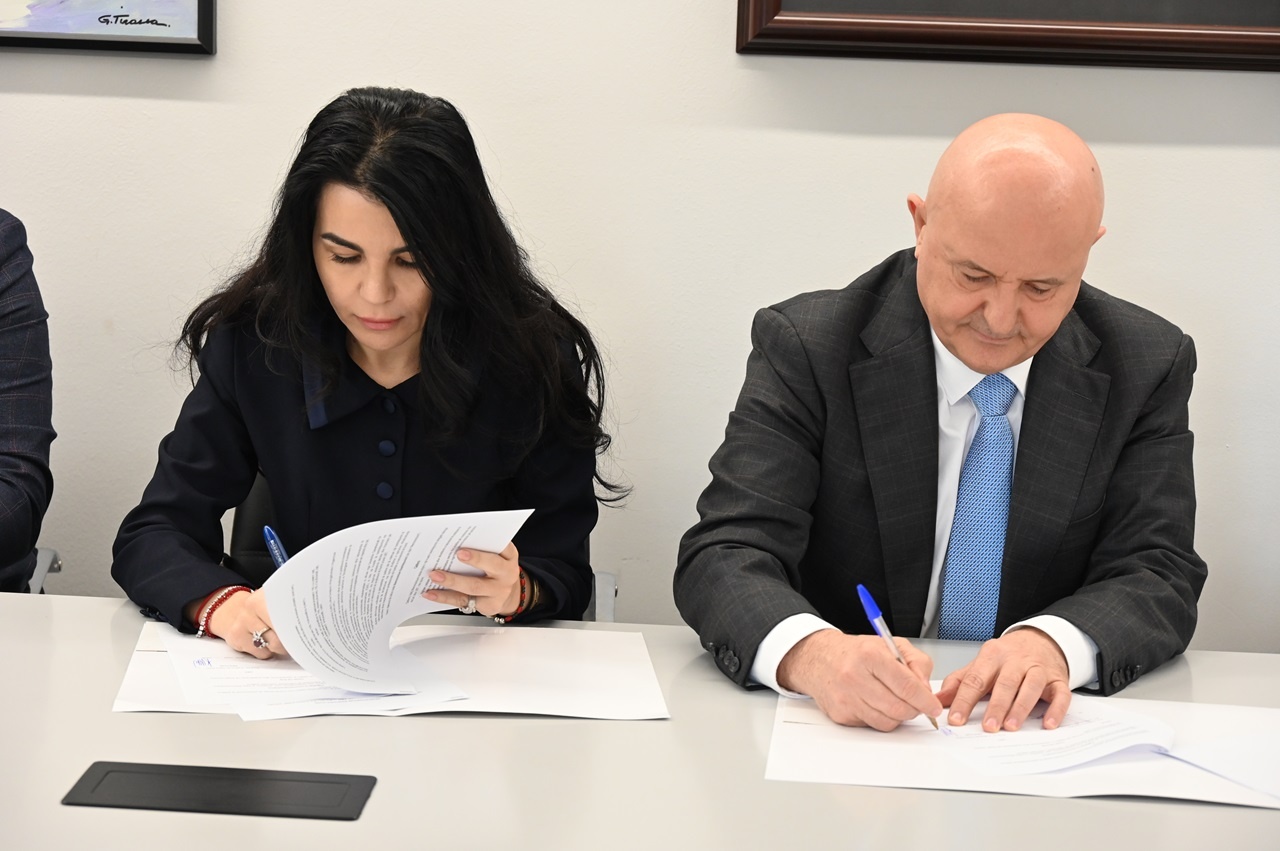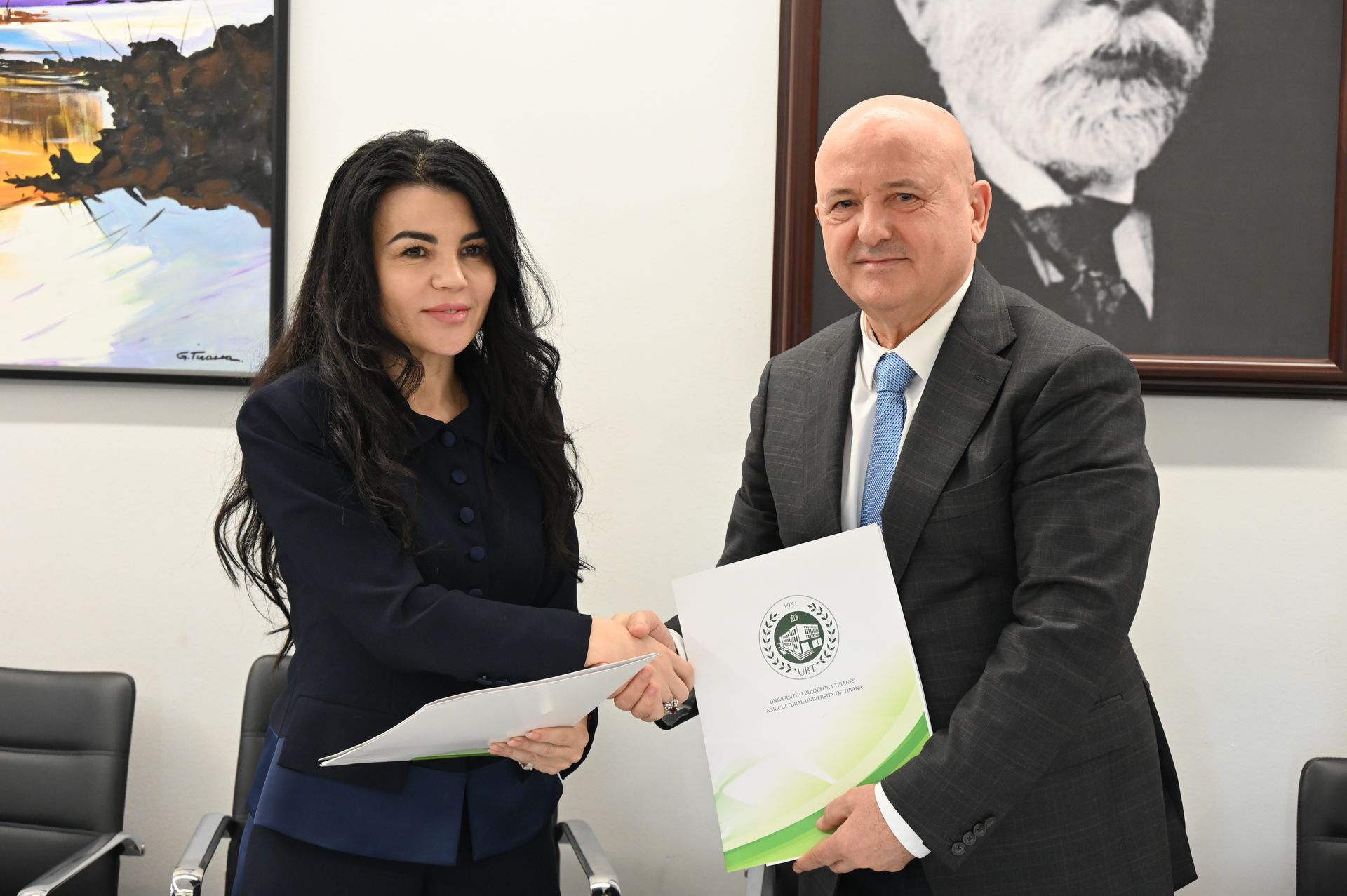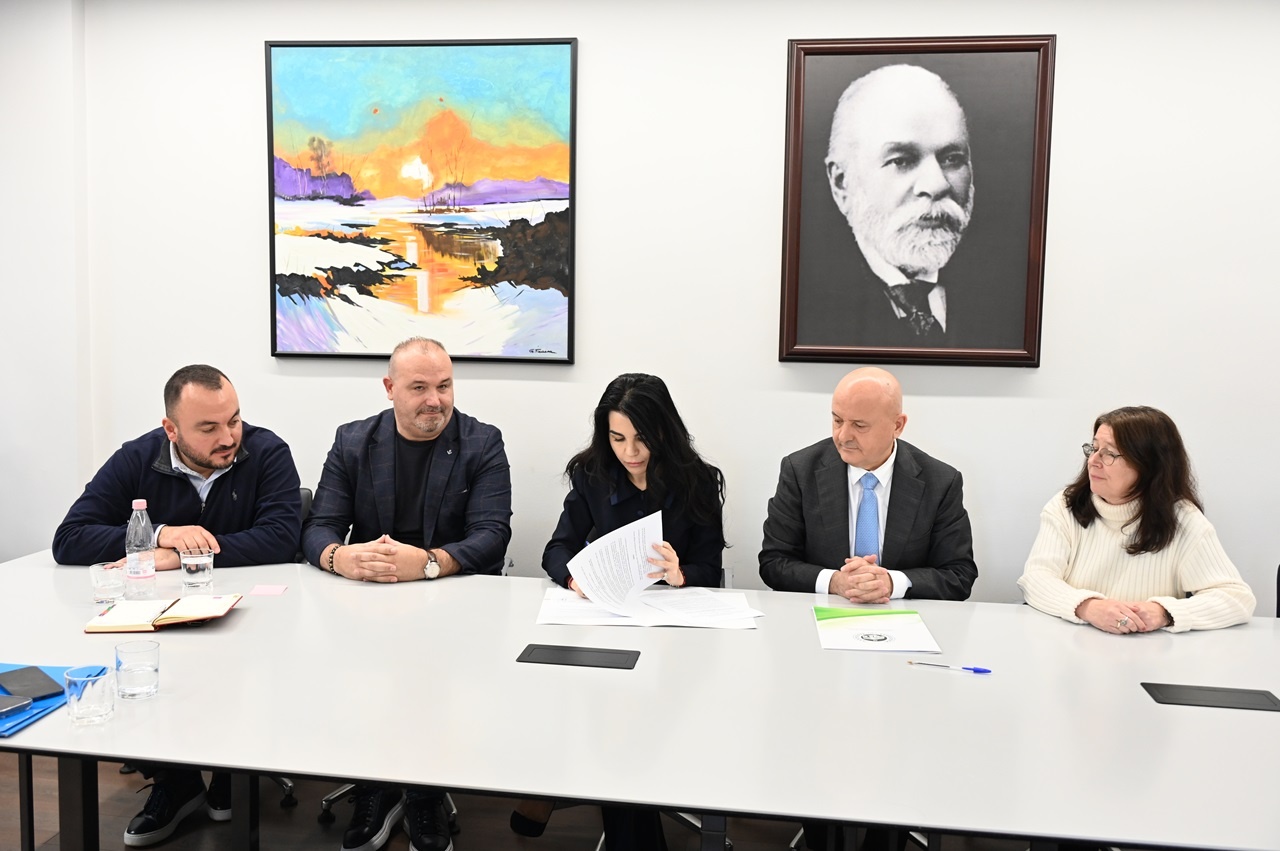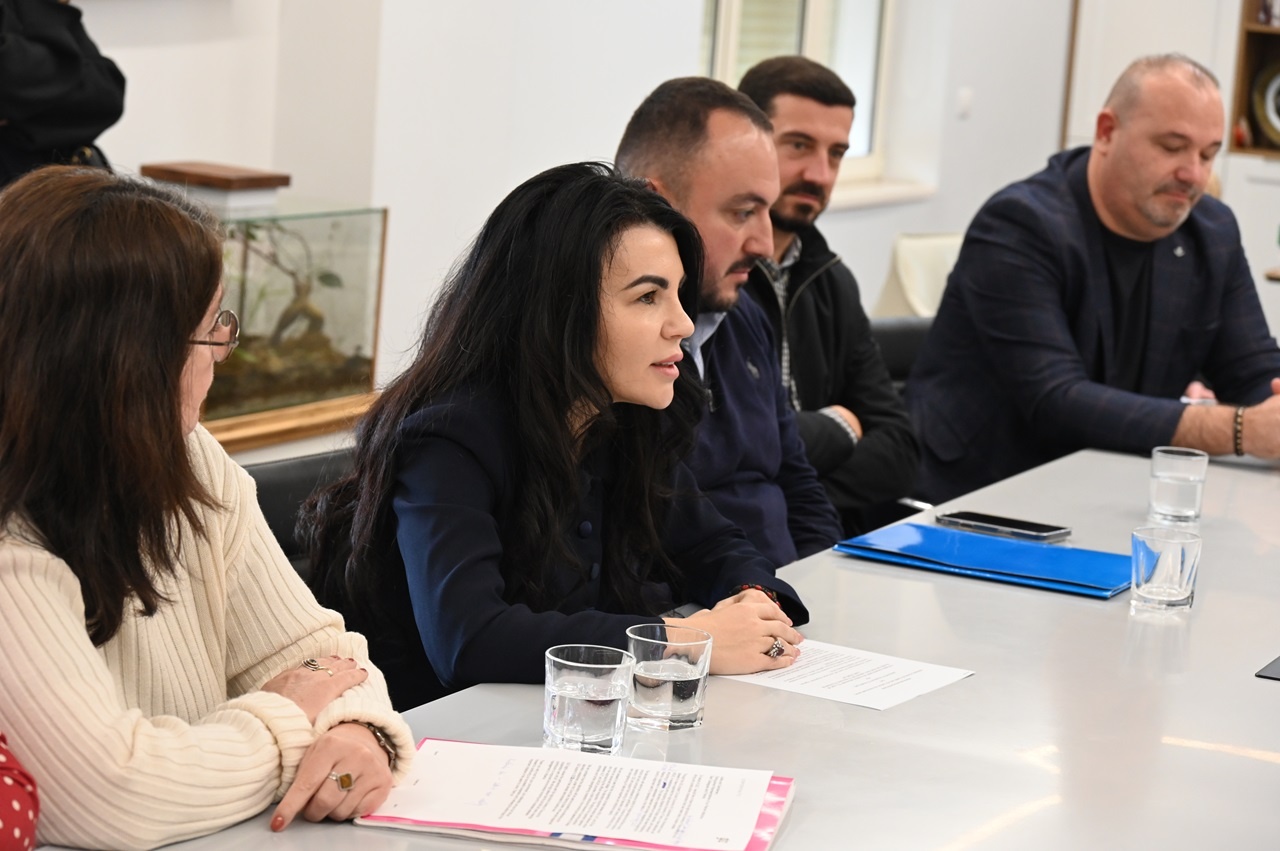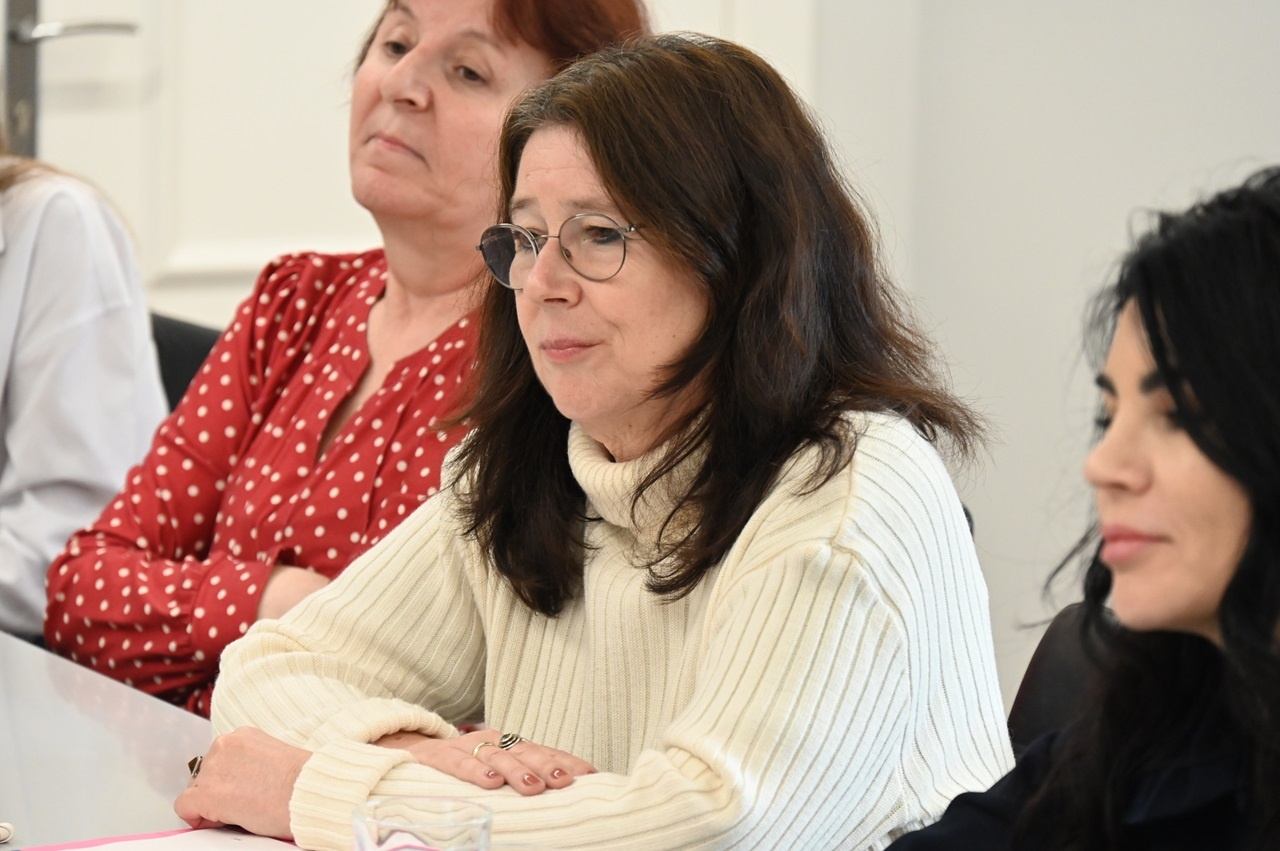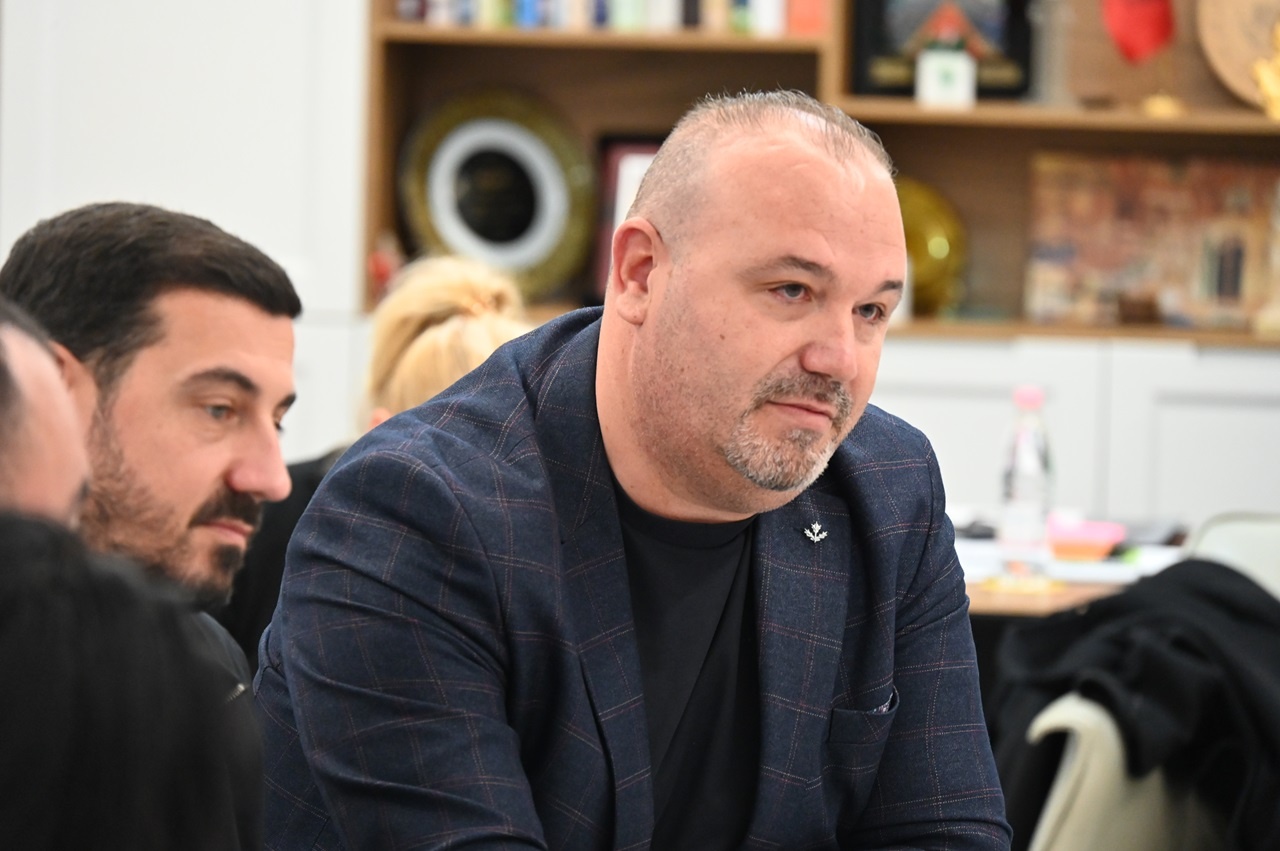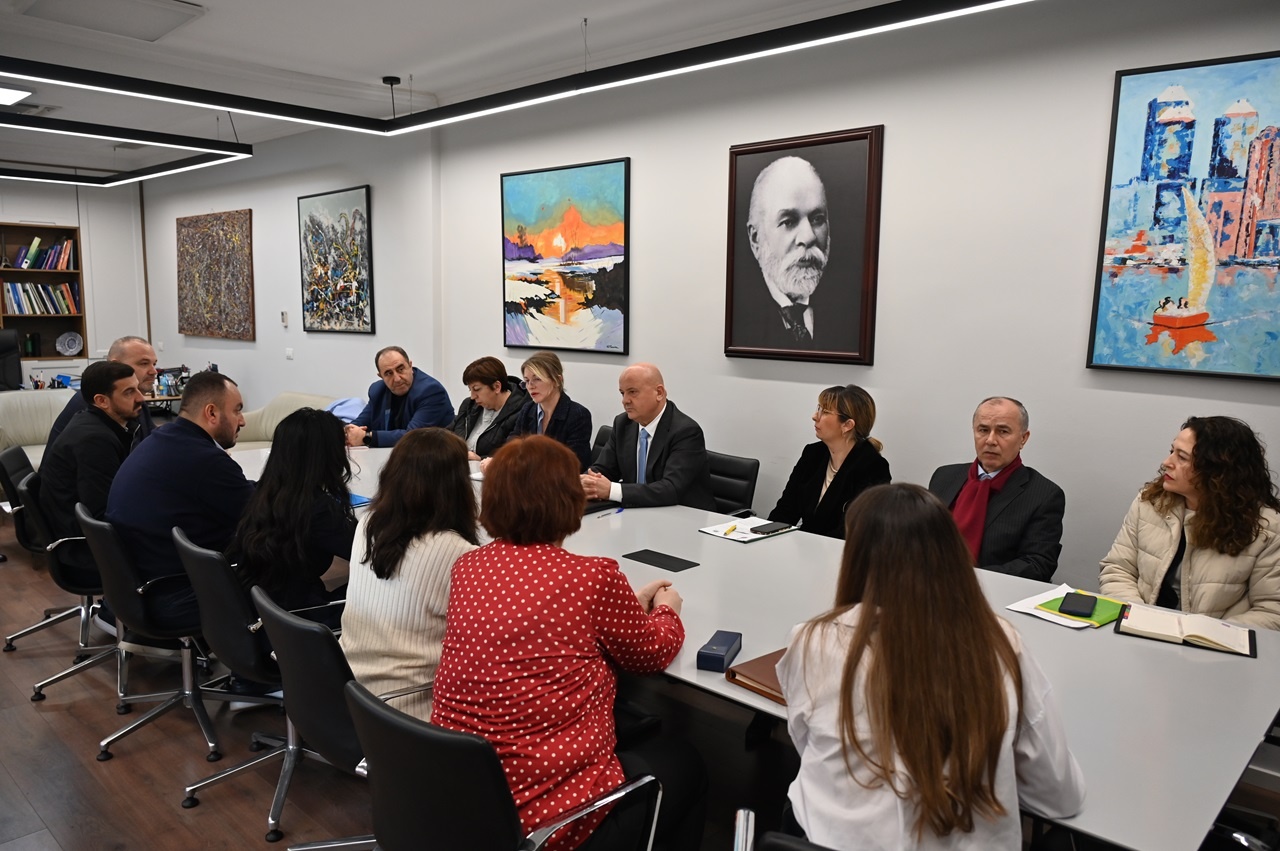
The Agricultural University of Tirana welcomed the staff of the National Agency for Water Supply and Sewerage (AKUK), led by the Director General, Ms. Elidjana Cela, as well as Ms. Christine König, Commission Manager for the Circular Economy for Sustainable Development project in Albania.
This meeting marked an important milestone for UBT, as a strategic cooperation agreement with AKUK was finalized. With the financial and technical support of GIZ, the agreement enabled the establishment of the first laboratory in Albania dedicated to the analysis of sludge generated from wastewater treatment. Thanks to this support, the laboratory will also undergo the accreditation process, ensuring all necessary conditions and the required reliability to carry out the full range of analyses needed for this parameter.
Such a laboratory is not merely an infrastructure investment, but represents a key pillar in the sustainable management of sludge in the country. AKUK will use the results produced by this laboratory to ensure institutional coordination with regional water supply and sewerage companies and other relevant sector stakeholders, for reporting in compliance with Directive 86/278/EEC and its monitoring unit, as well as to support the long-term operation and sustainability of the laboratory.
Through this project, all sludge will be analyzed at the UBT laboratory, ensuring its quality, safety, and suitability for agricultural use, in full compliance with national standards and those of the European Union.
This laboratory builds on the success of UBT’s Early COVID-19 Assessment Laboratory, which was also financially supported by GIZ. Thanks to the dedication, professionalism, and proven performance demonstrated by UBT in establishing and operating that vital laboratory for Albania, GIZ renewed its trust by supporting this new strategic investment. As a result, UBT becomes the first institution in the country with full capacities for environmental monitoring and circular economy, consolidating its role as a national reference center for the analysis of soil, water, waste, and sludge.