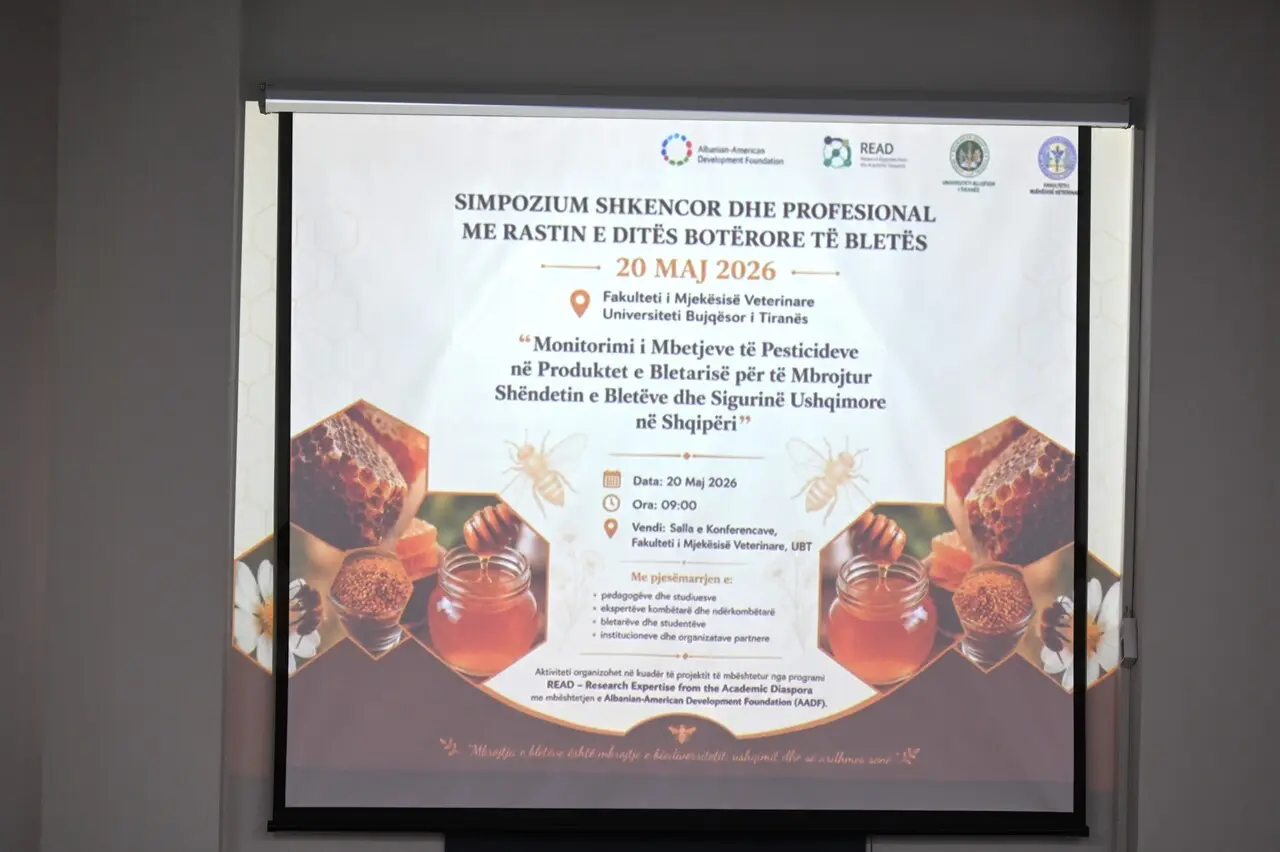
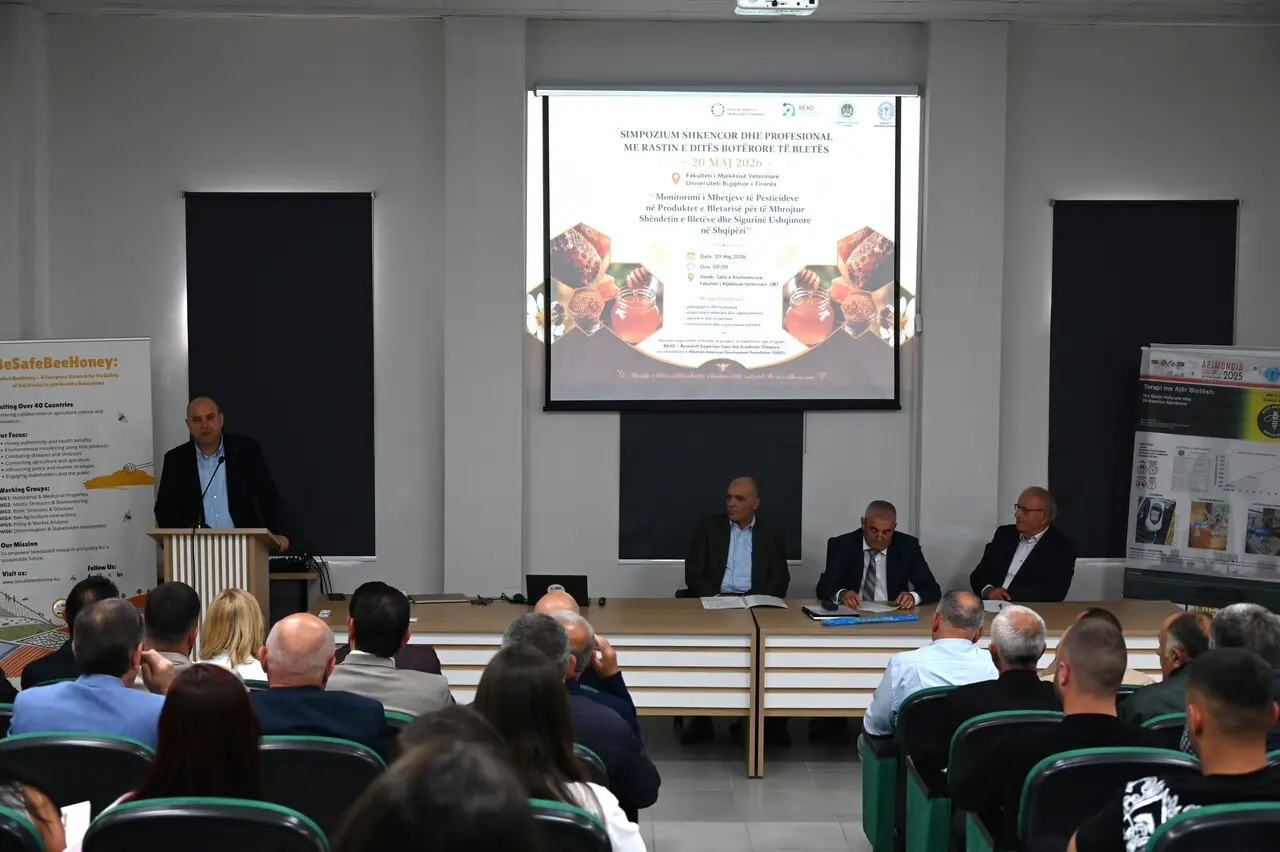
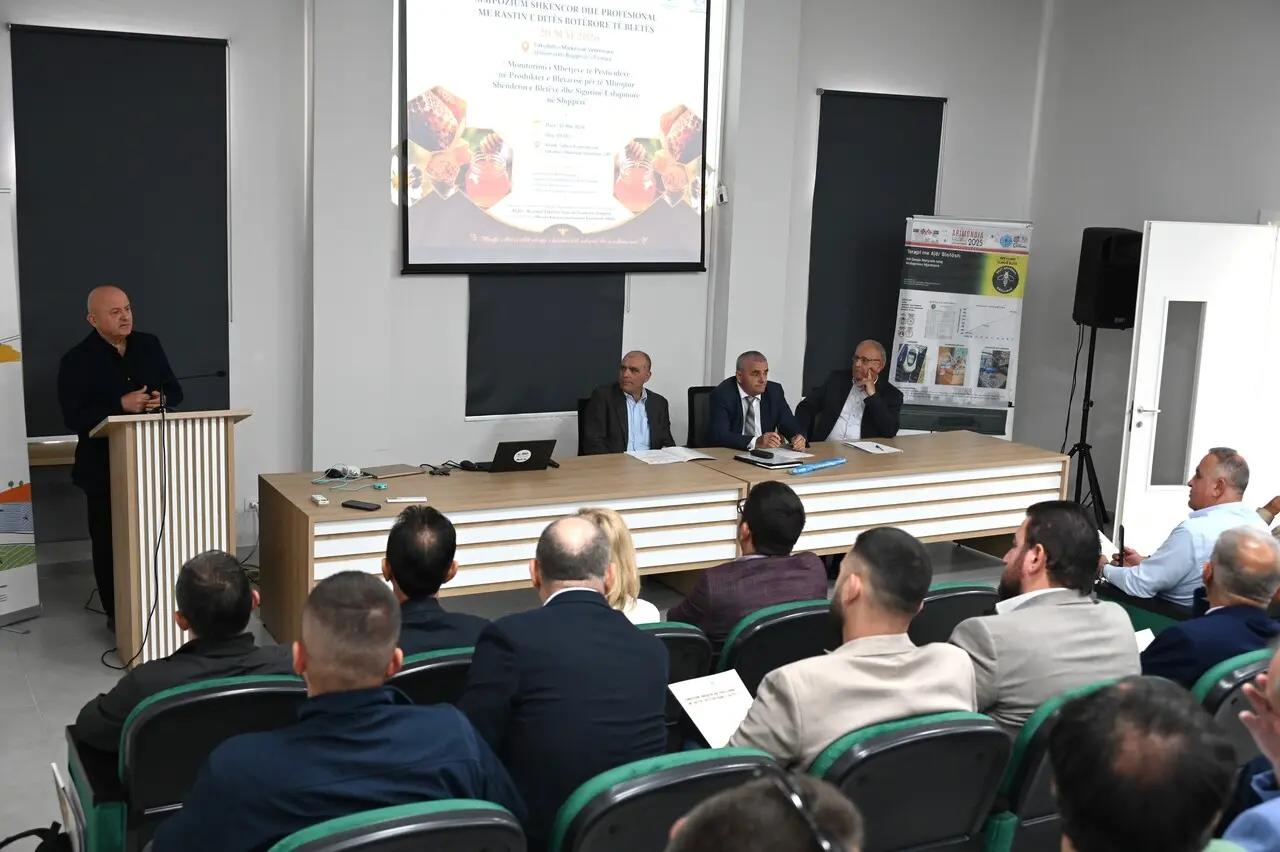
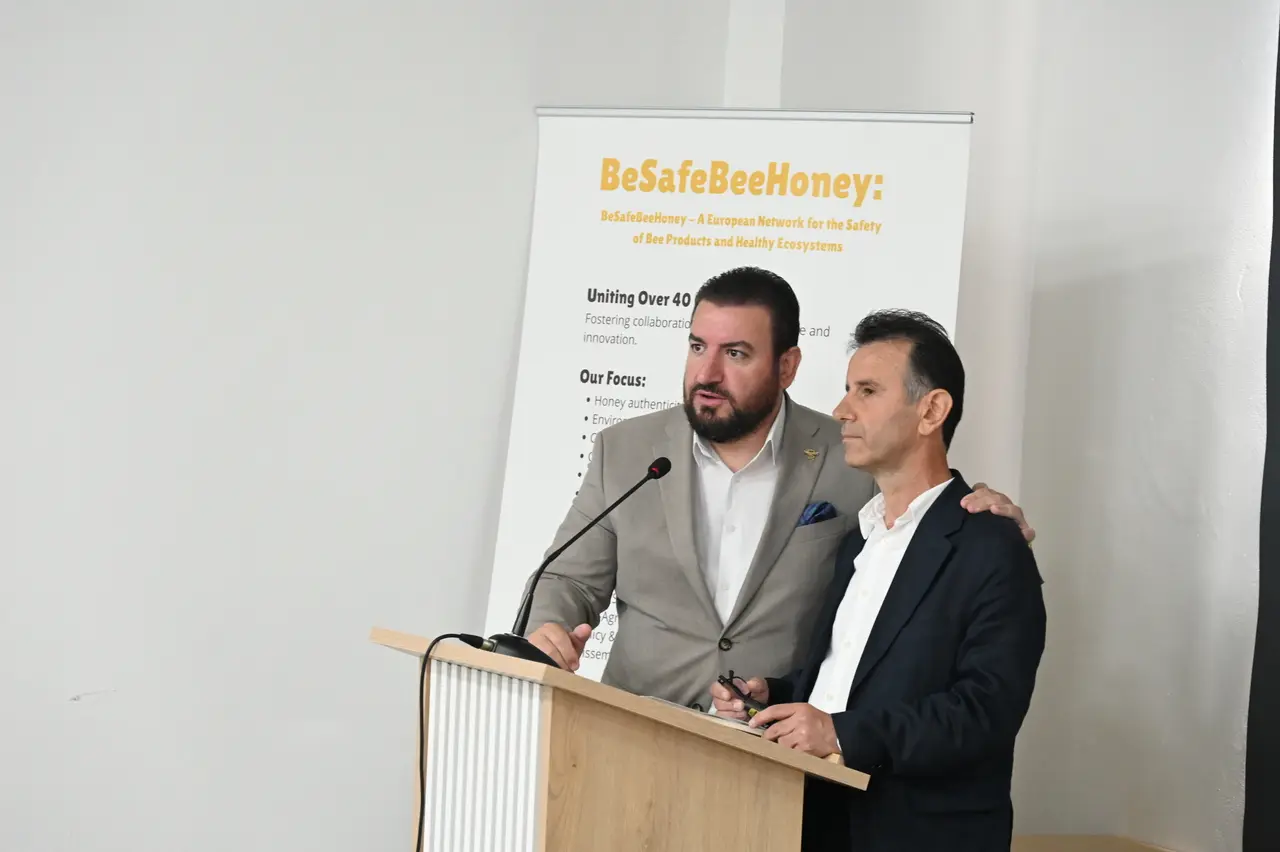
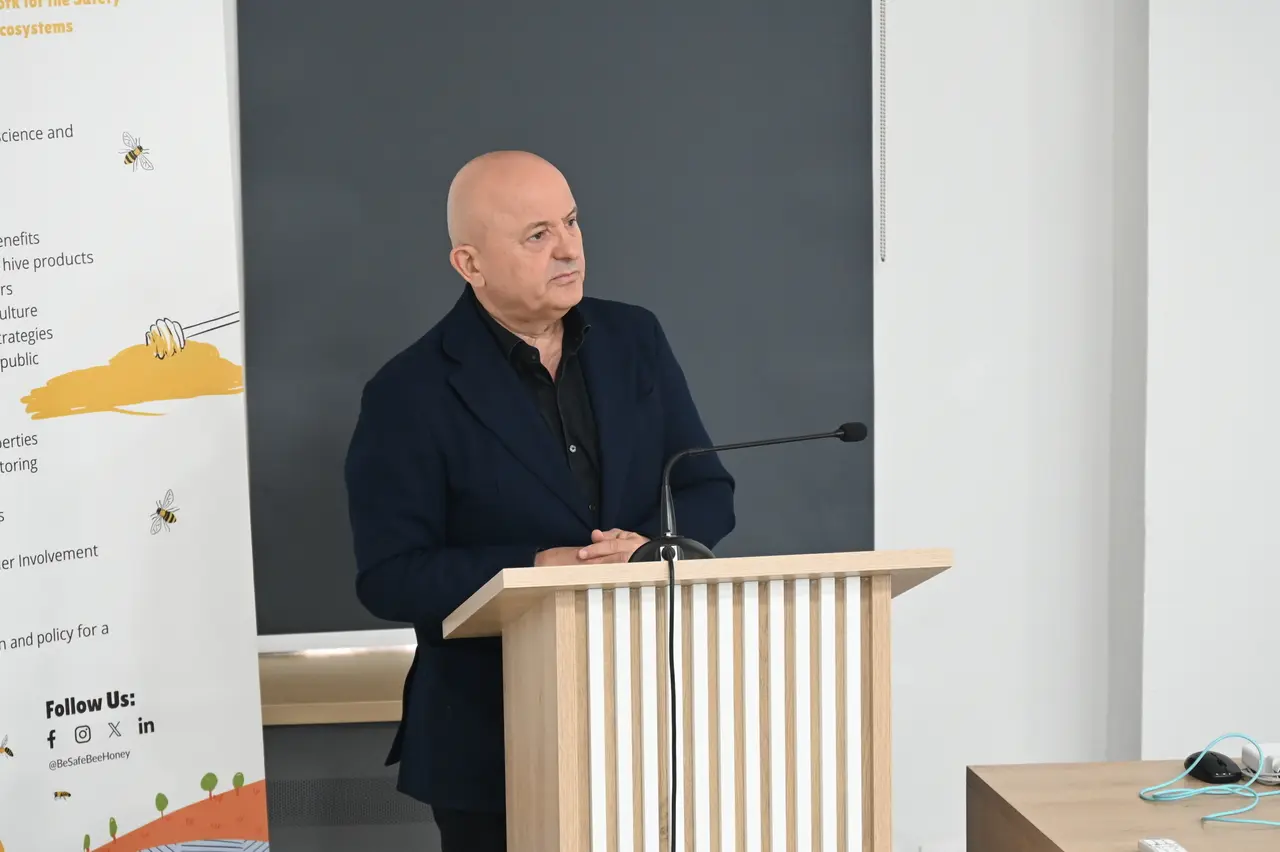
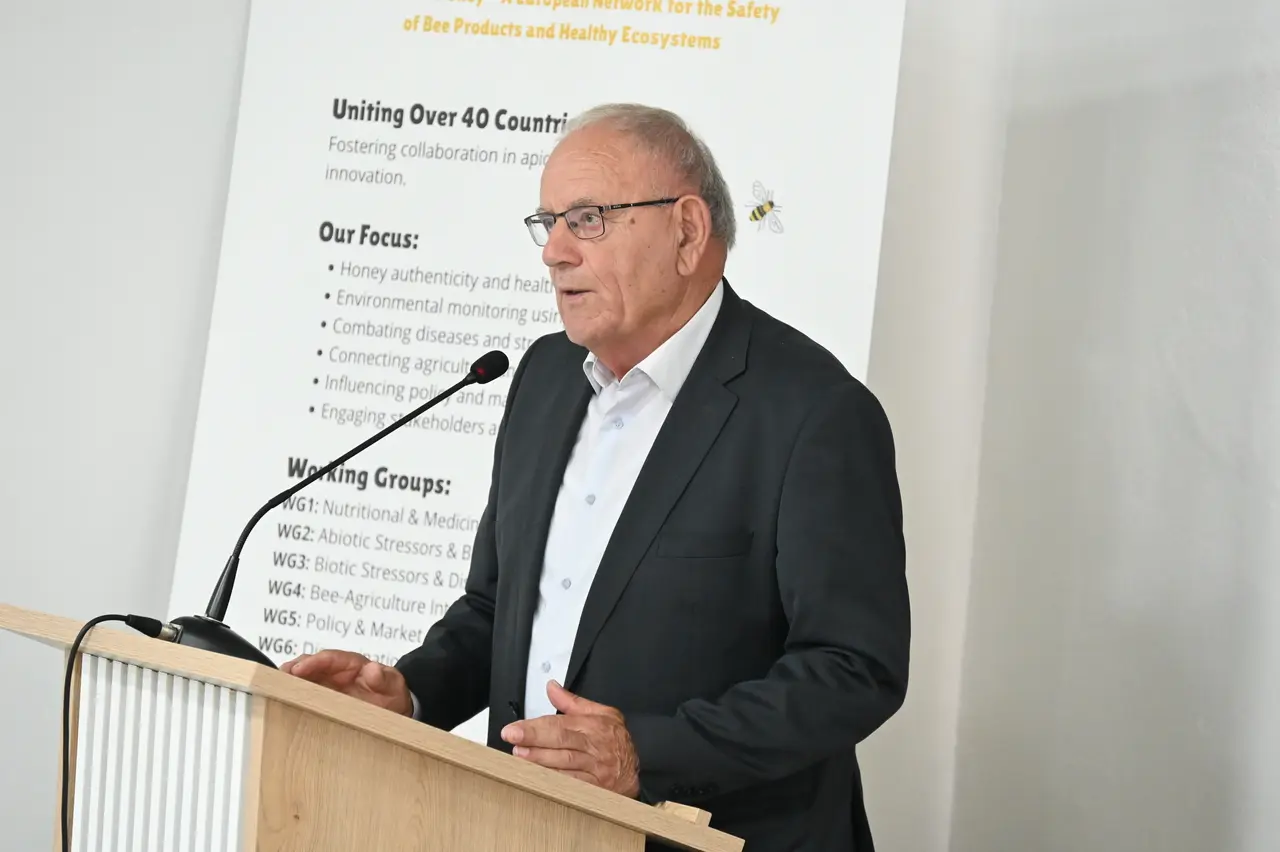
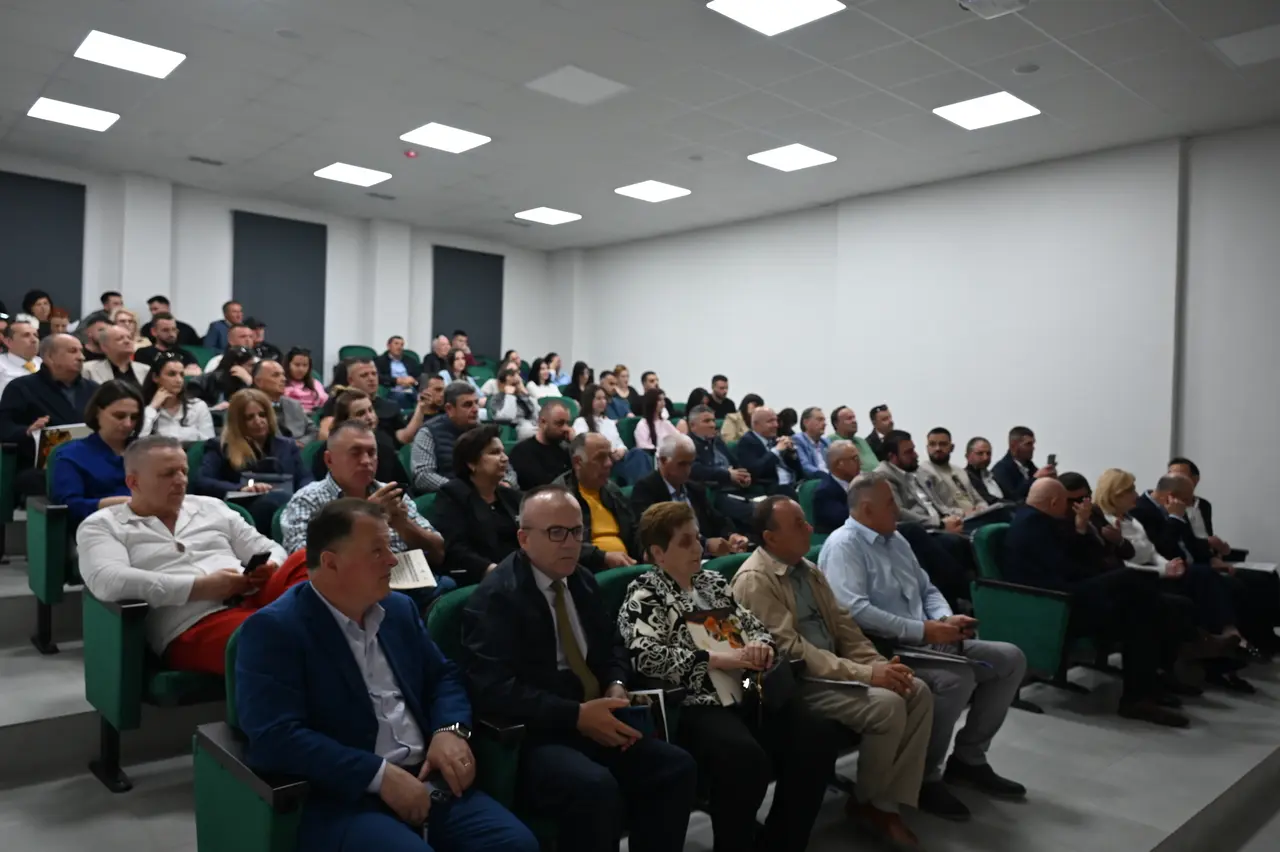
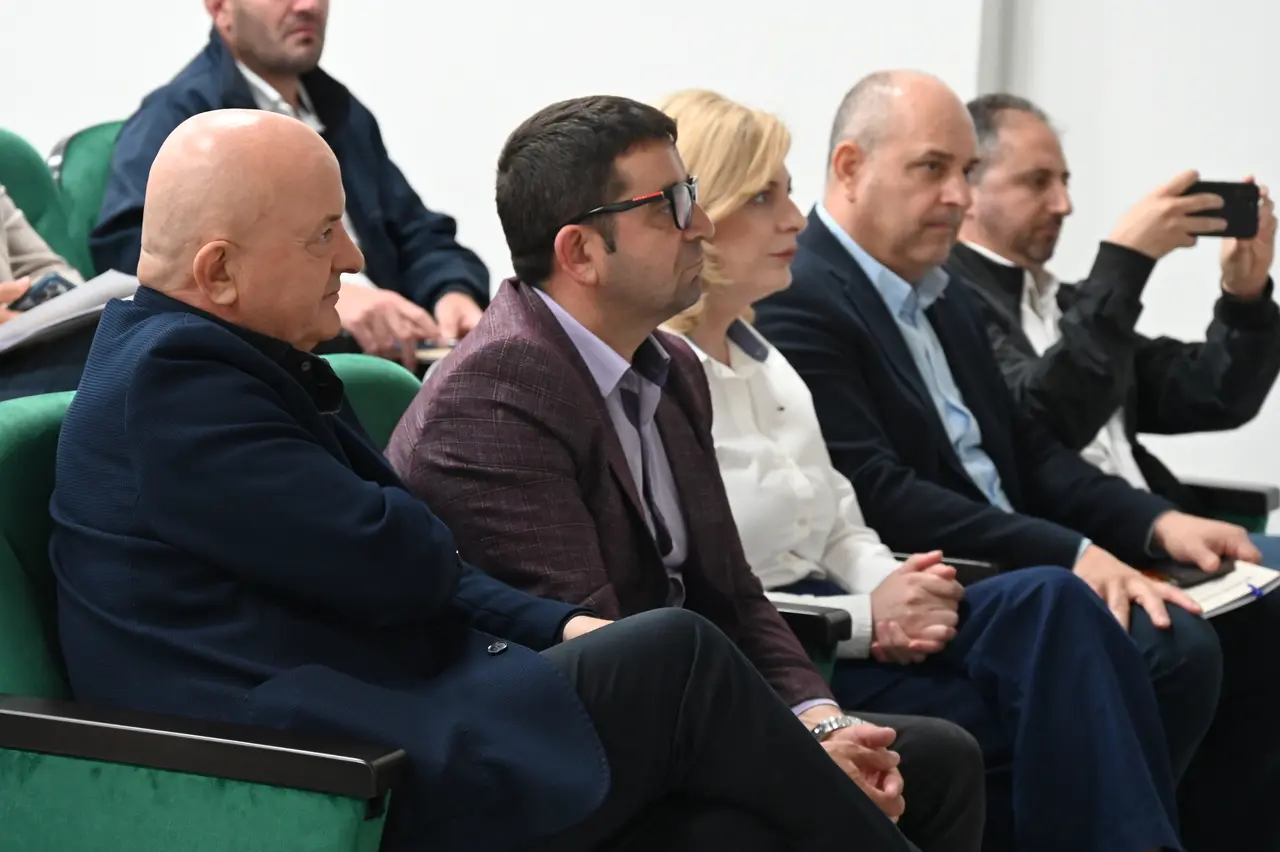
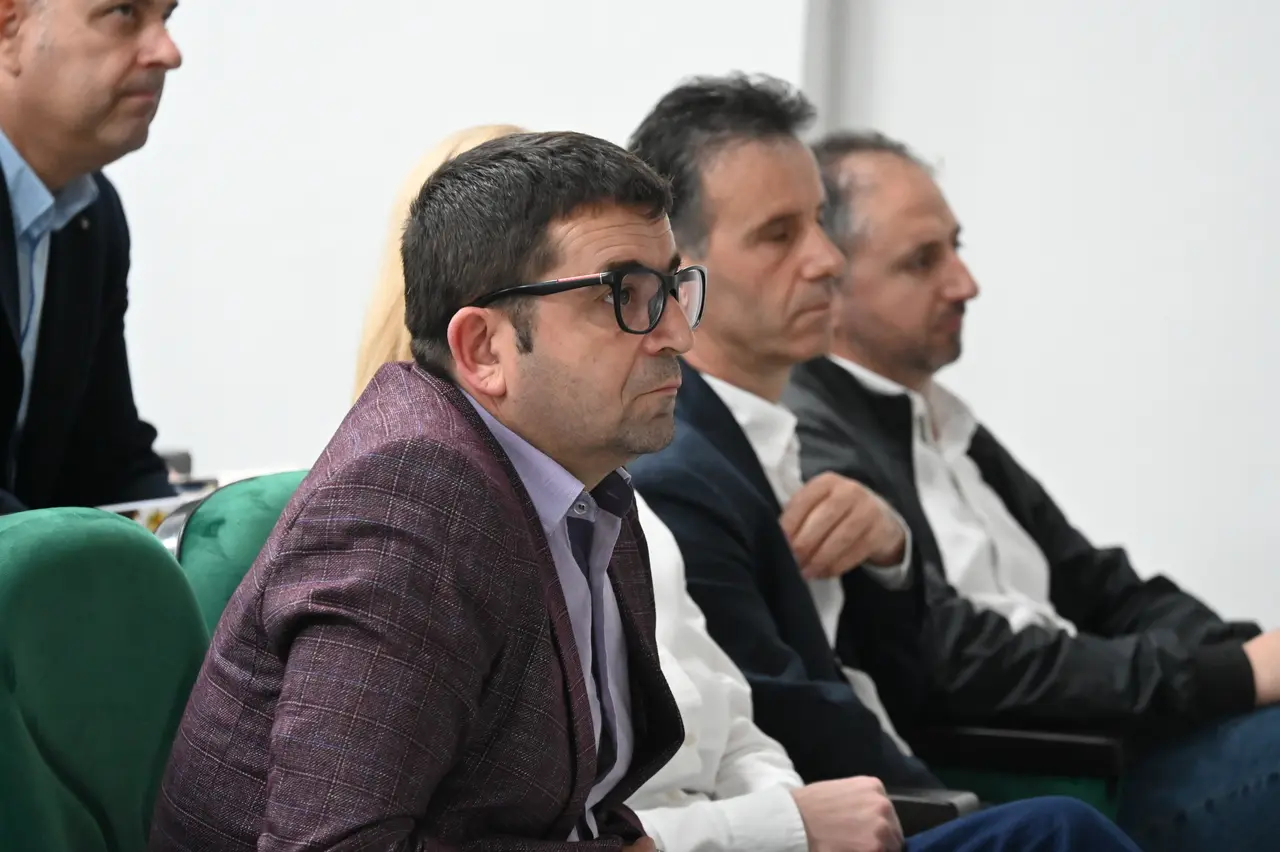
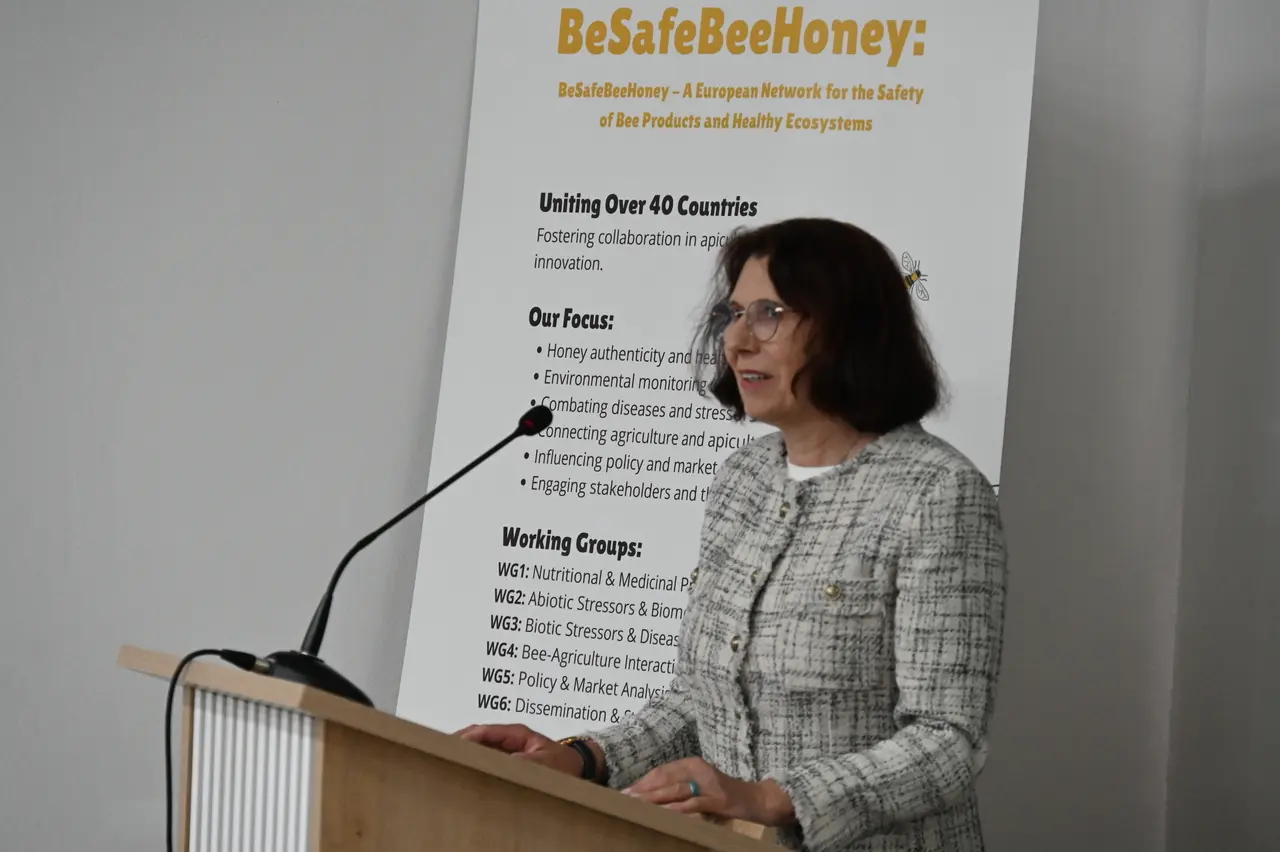
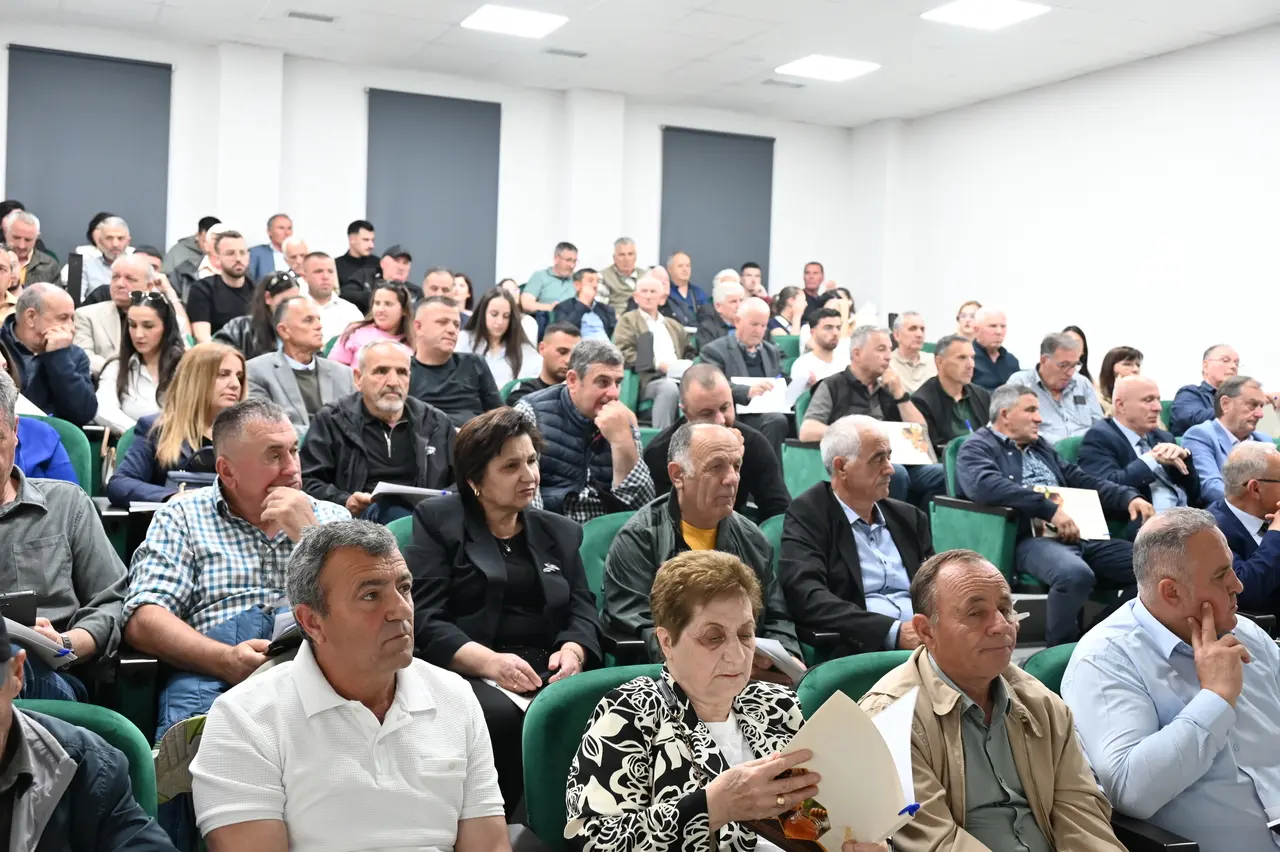
On World Bee Day, the Agricultural University of Tirana held this Wednesday the national symposium titled “From Hive to Health: Pesticides, Bees and Food Safety in Albania,” an event that brought together academics, food safety experts, representatives of the beekeeping sector, researchers, and students to discuss the impact of pesticides on beekeeping and food safety in the country.
The event was organized by the Faculty of Veterinary Medicine at the Agricultural University of Tirana, within the framework of the READ Programme (Research Expertise from the Academic Diaspora), with the financial support of the Albanian-American Development Foundation.
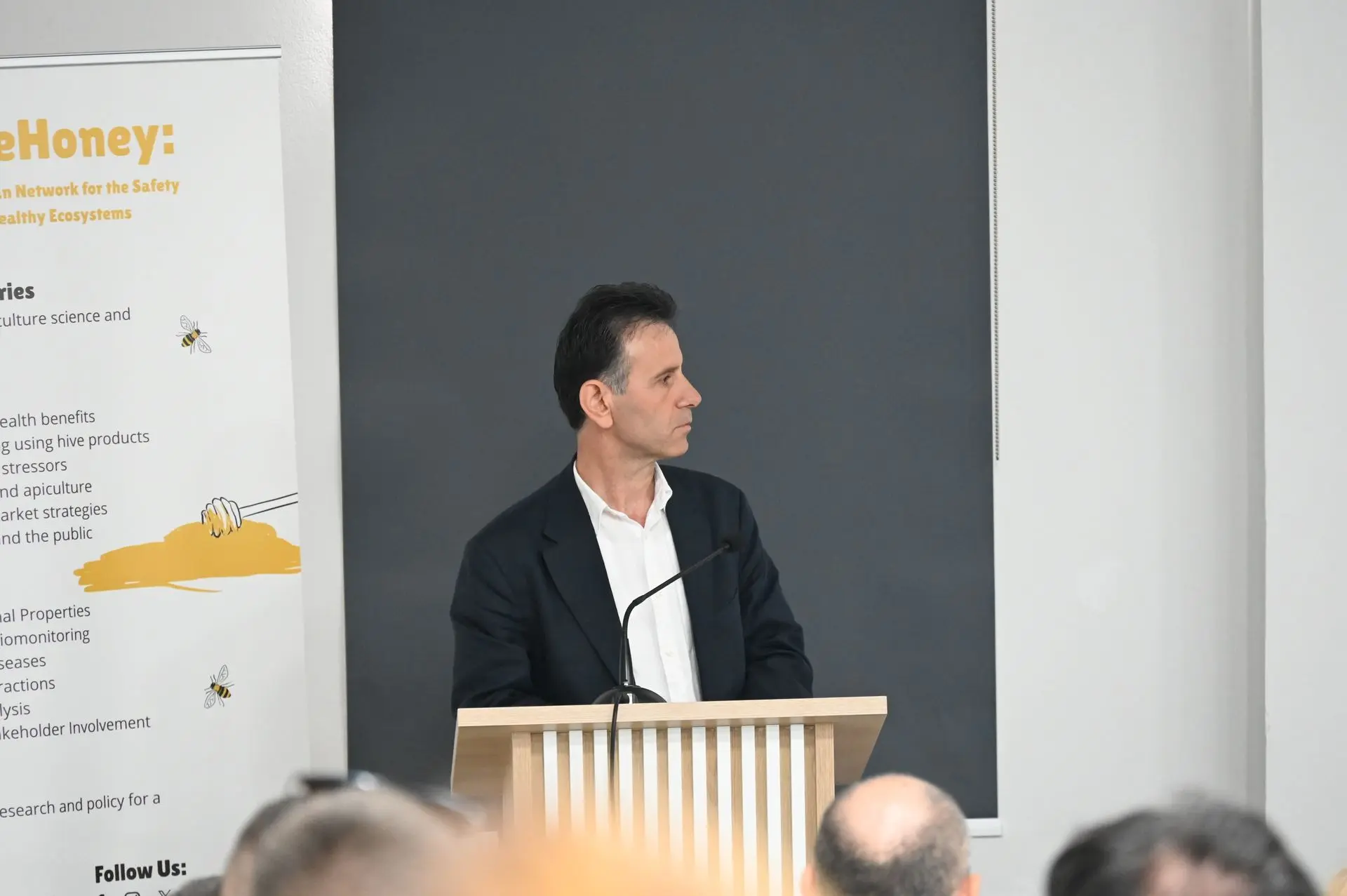
The symposium opened with a welcoming speech by the Rector of the Agricultural University of Tirana, Prof. Dr. Fatbardh Sallaku, who emphasized the importance of scientific research and interinstitutional cooperation in protecting food safety and ensuring the sustainable development of Albania’s agri-food sector. In his remarks, the Rector stated that he was pleased to see such activities being organized at UBT and added that the Faculty of Veterinary Medicine at the university will soon become a regional center.
Prof. Dr. Rezart Postoli, Dean of the Faculty of Veterinary Medicine, expressed his appreciation for the vital role that bees play in preserving biodiversity, food safety, and the balance of nature, emphasizing that their protection is a shared responsibility.
Furthermore, Prof. Dr. Kastriot Korro presented the first results in Albania regarding the monitoring of pesticide residues in honey, pollen, and propolis, highlighting the importance of laboratory control and the impact that pesticides have on bees and the food chain.
A significant presence at the event was marked by beekeepers from Albania and Kosovo, who took part in the discussions, turning the symposium into a platform for collaboration and exchange of experiences for the sector.
An online intervention was also delivered by Prof. Albert Licollari, Director of the Toxicology Laboratory at Nucro-Technics in Canada, who spoke about the role of advanced toxicological analyses in ensuring food safety and the opportunities for cooperation between Albanian institutions and international partners.
The event also featured student presentations, discussions with Dr. Vitor Malutaj from the Beekeepers Federation and Abdyl Arifaj from the Association of Apitherapists, as well as an applied workshop on safe beekeeping practices and reducing pesticide-related risks. During the closing panel, moderated by Dr. Fatjon Hoxha, participants discussed the potential and future of the beekeeping sector in Albania, along with recommendations for safer policies and practices for the sector.