Can organic waste be transformed from an environmental problem into a solution for water purification? This very possibility was at the heart of the first day of the BAAWas workshop, held today at the Agricultural University of Tirana. Through the production and use of biochar, the project is exploring concrete alternatives for more sustainable organic waste management and water treatment in Albania.
The workshop was opened by the Rector of the Agricultural University of Tirana (UBT), Prof. Dr. Fatbardh Sallaku, and the Head of the Department of Environment and Natural Resources, Prof. Dr. Ferdi Brahushi.
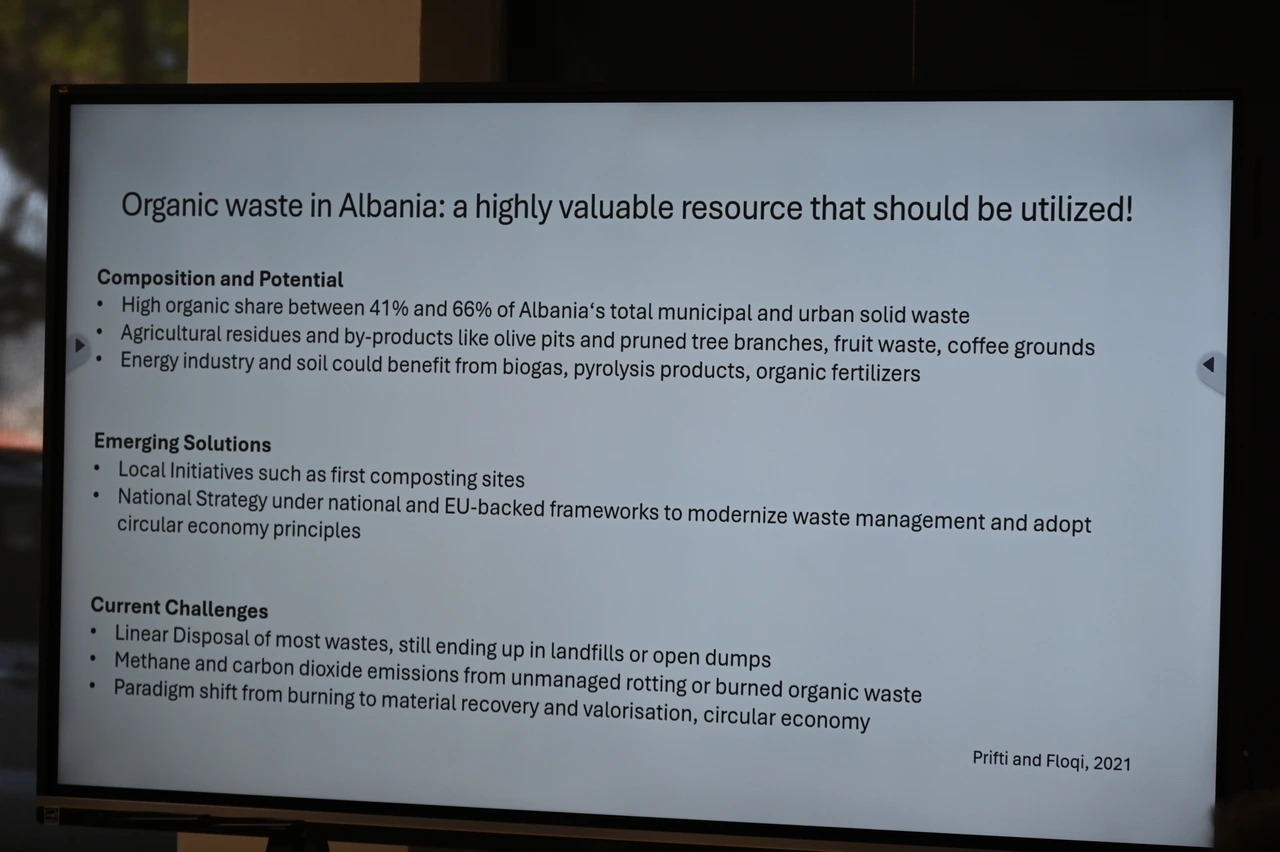
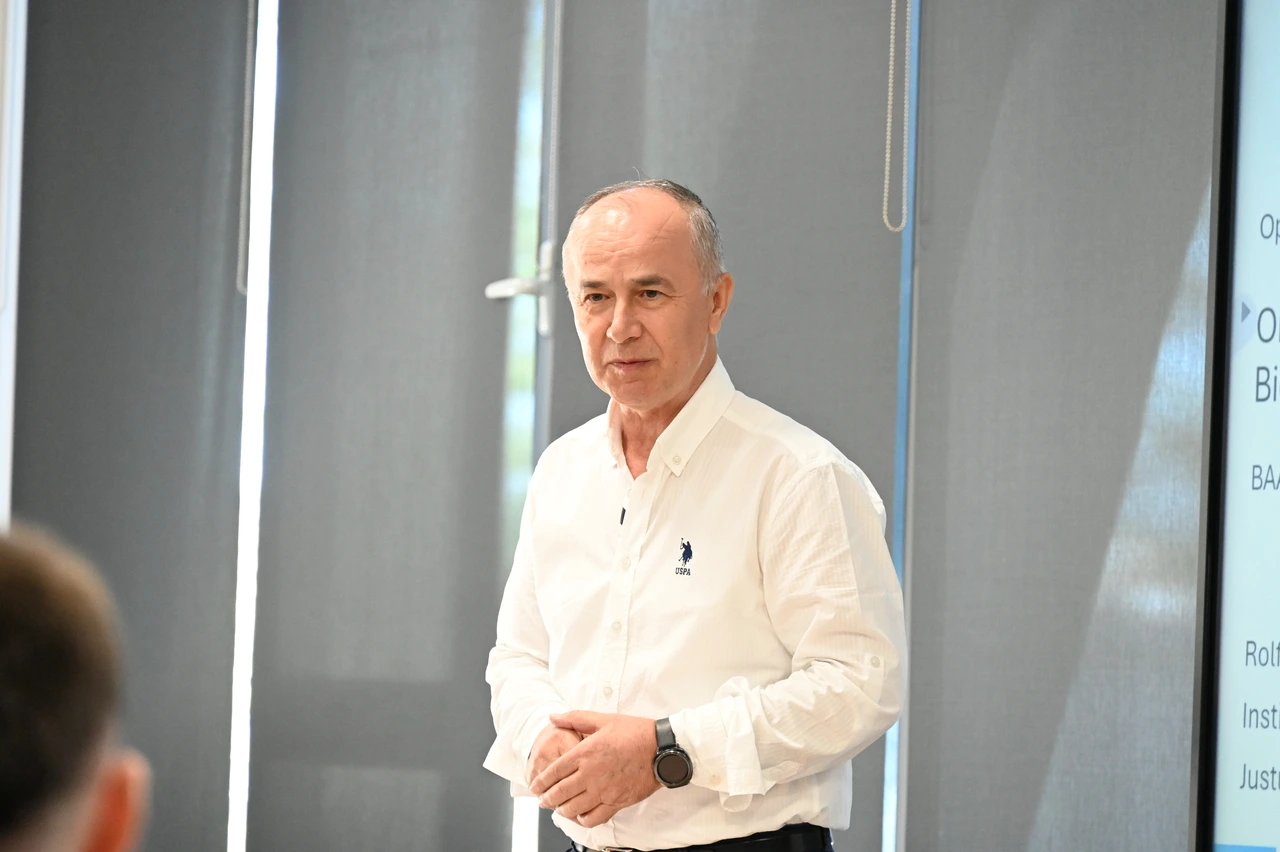
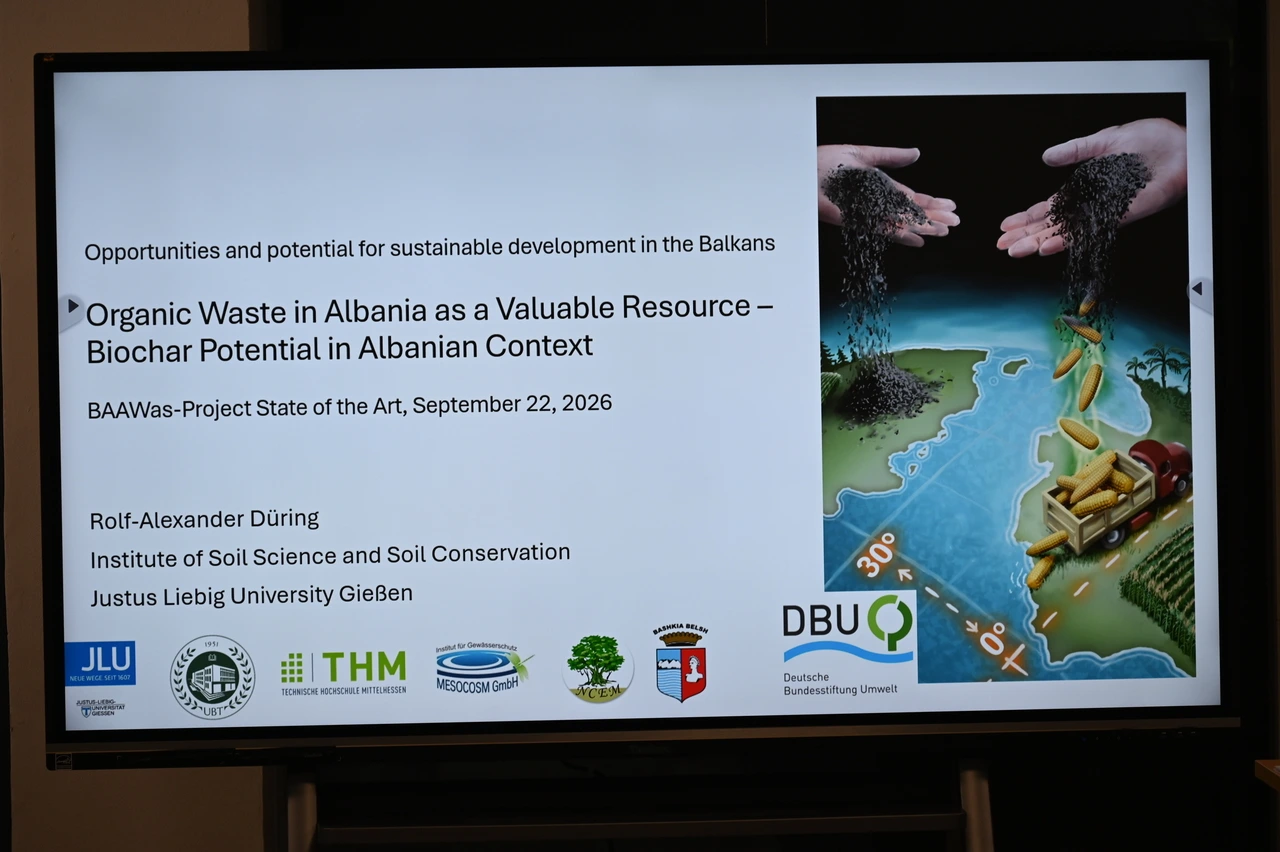
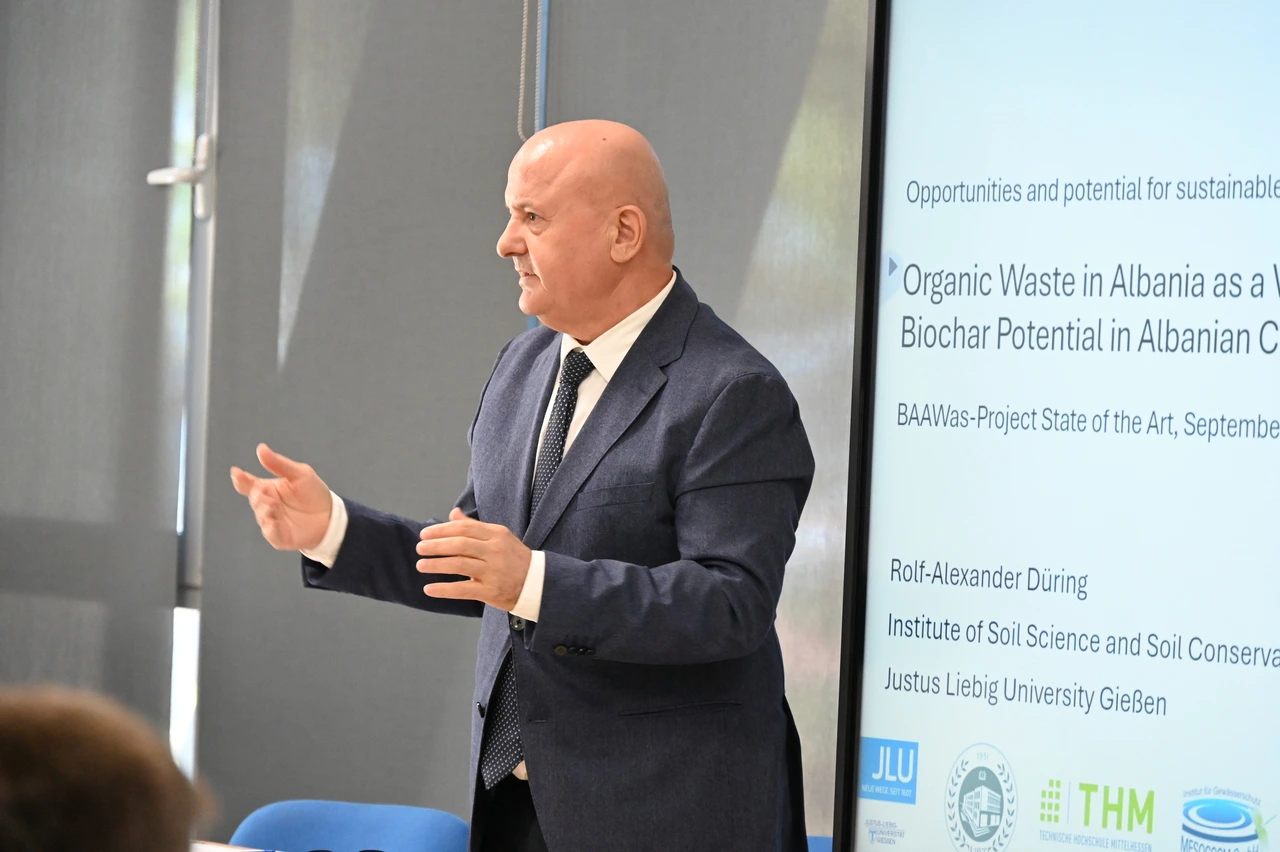
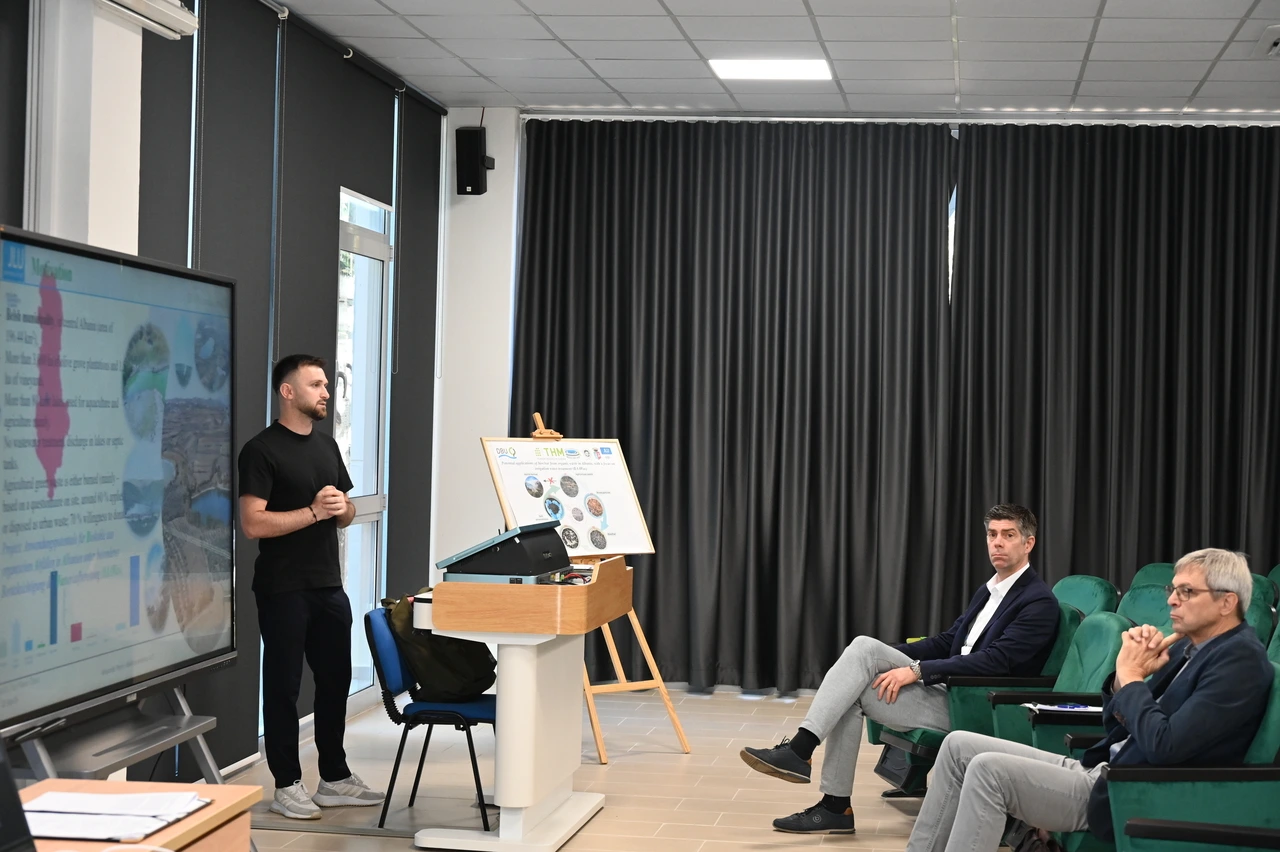
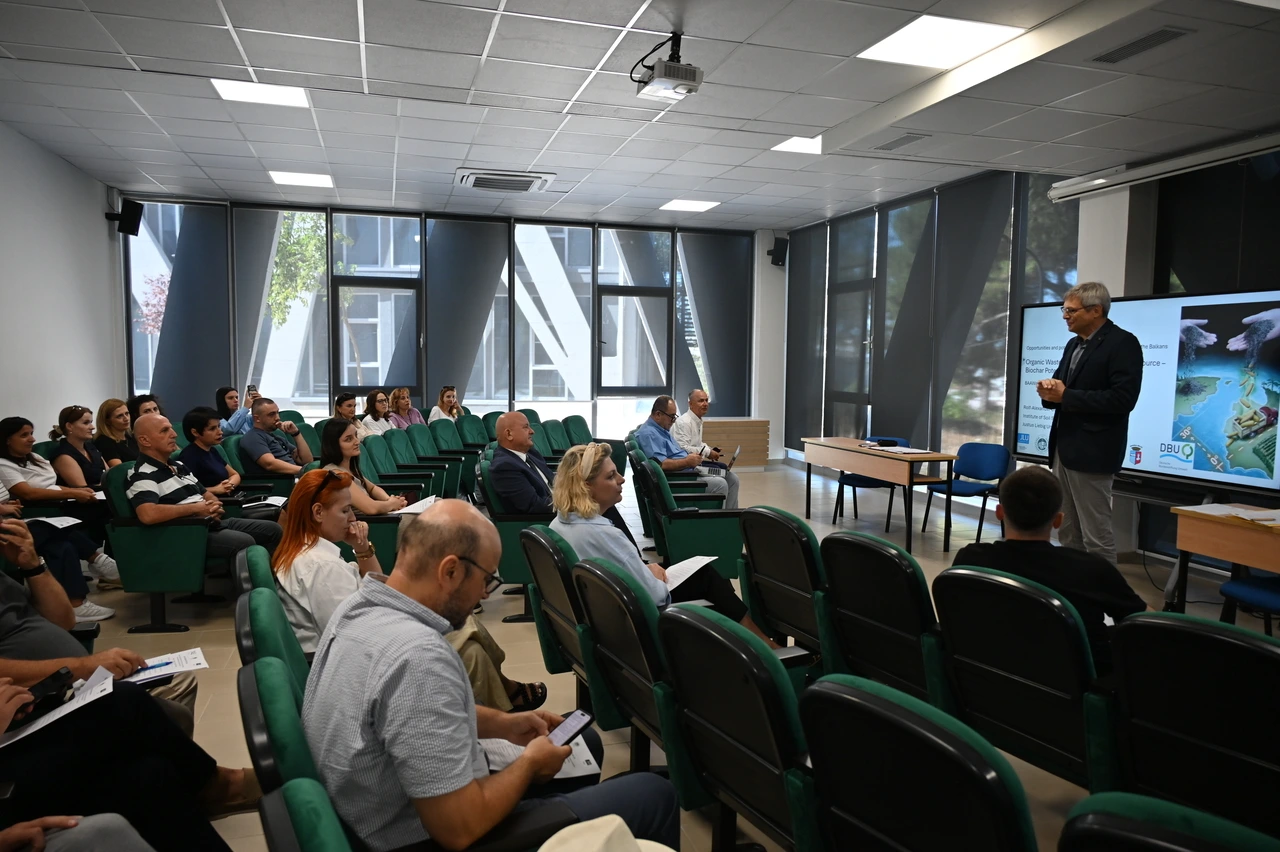
Dr. Aleksandër Peqini, Prof. Dr. Ferdi Brahushi, and Prof. Dr. Rolf-Alexander Düring then presented the situation of organic waste in Albania, its potential for biochar production, and the objectives of the BAAWas project.
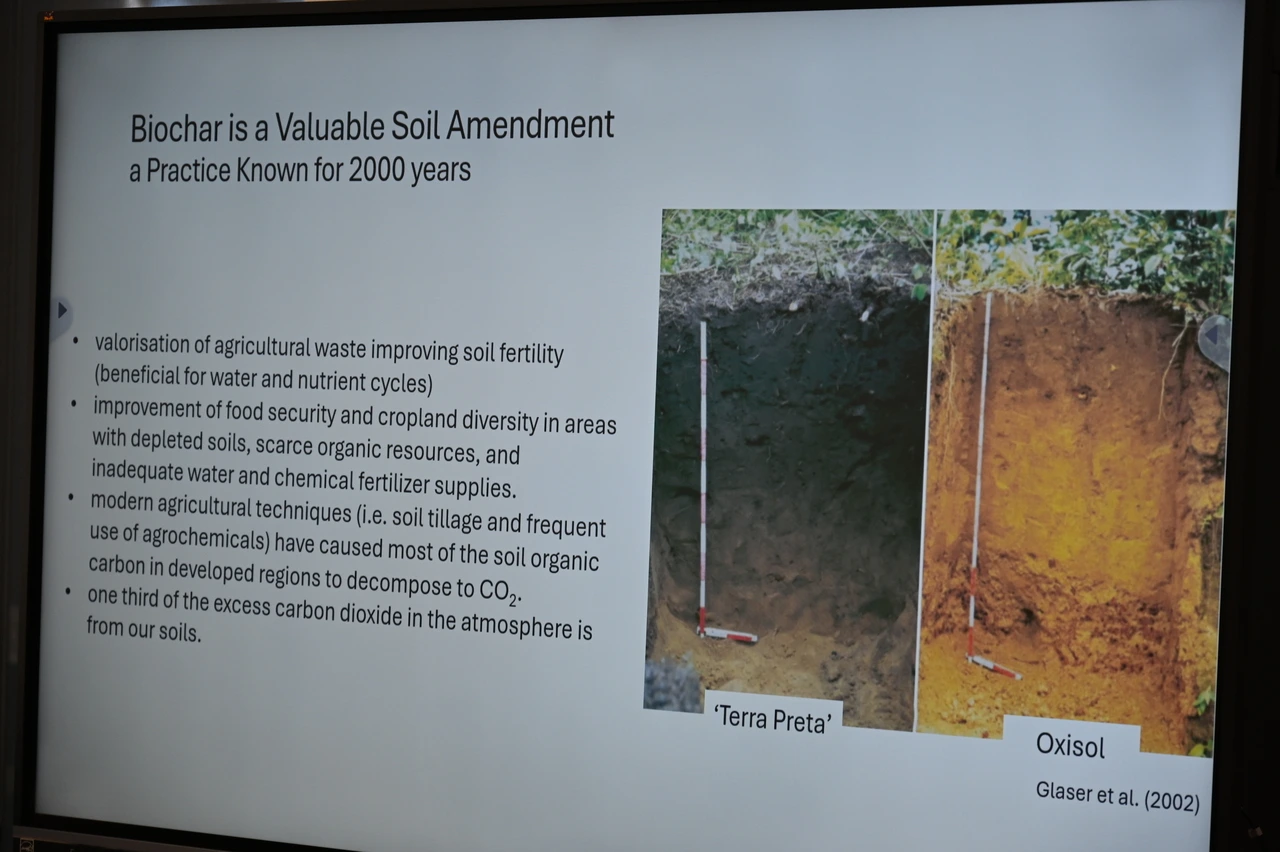
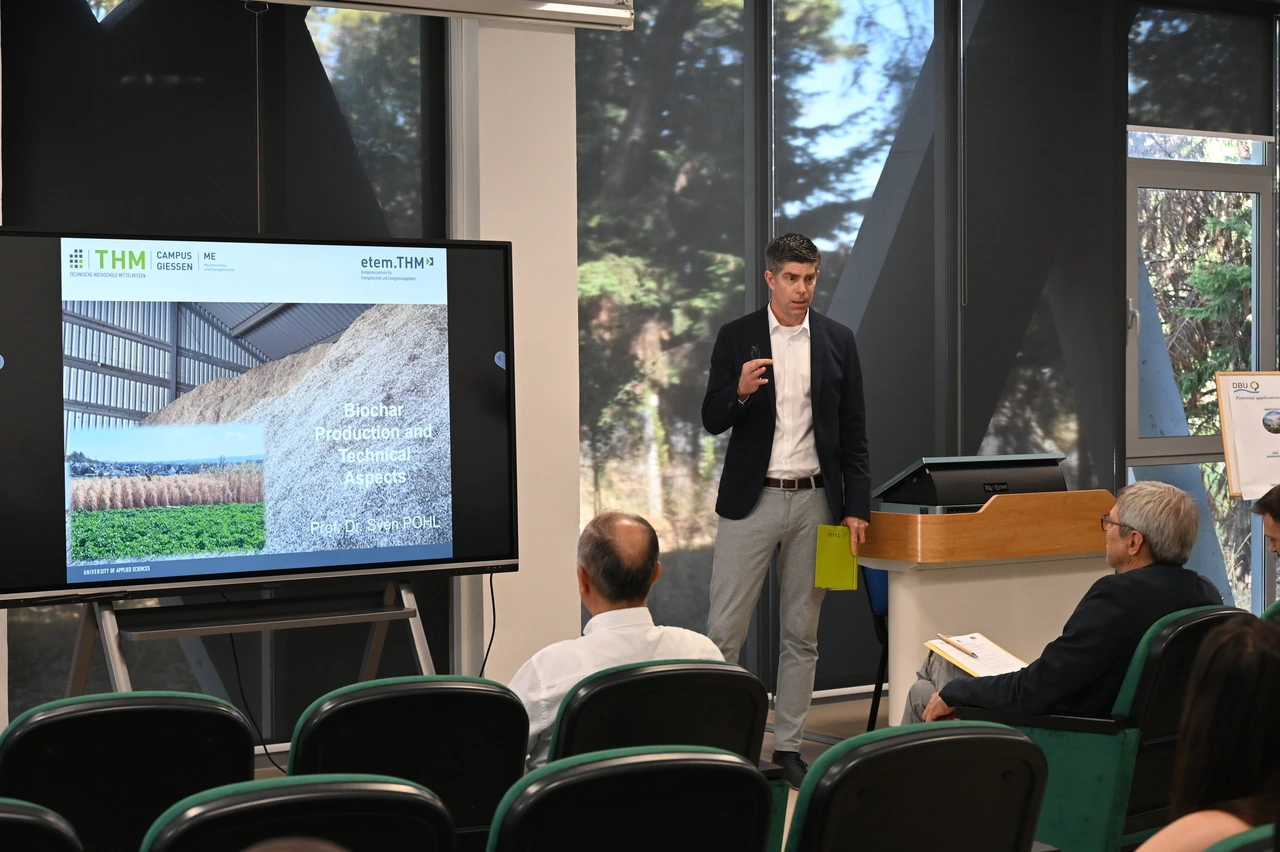
Prof. Dr. Sven Pohl focused on the biochar production process, its technical aspects, and the limitations associated with it.
The presentations highlighted the need for more sustainable management of water and organic waste, particularly in the context of agricultural development and the increasing use of water for irrigation. One of the issues addressed was also water pollution caused by wastewater discharges and substances originating from agricultural activities, including pesticides.
In this context, biochar was presented as a material with potential for use in water purification, as it can help capture certain pollutants. Results from tests involving terbuthylazine were presented as a concrete example of how biochar can be used for this purpose.
Another part of the discussion focused on Belsh, where the possibility of establishing a sustainable wastewater treatment system is being explored. The proposed solution combines a constructed wetland with the use of biochar for the final purification of the water, while a feasibility study and a demonstration plant are planned in the Municipality of Belsh.
In this context, research data were also presented on the presence of residues from several pharmaceutical products in the waters of the Ishëm River basin, highlighting the broader issue of water pollution.
The workshop also addressed current practices for managing organic waste. The findings presented showed that burning is the most commonly reported practice, alongside leaving waste in the field, shredding, disposing of it with municipal waste, and composting. These data help provide a better understanding of the potential of organic waste as a feedstock for biochar production.
At the end of the sessions, participants visited the Agri-Environment and Ecology Laboratory (LAME) at UBT, where the pyrolysis equipment and the process through which biochar can be produced were also presented.
The BAAWas workshop is taking place from September 21 to 24, 2026, at UBT and in Belsh.